

 русский
 Español
 عربى
عربى


Double Diaphragm Pumps: Types, Parts, and Safe Operation
 2026.05.22
 Industry News
Types of Double Diaphragm Pumps
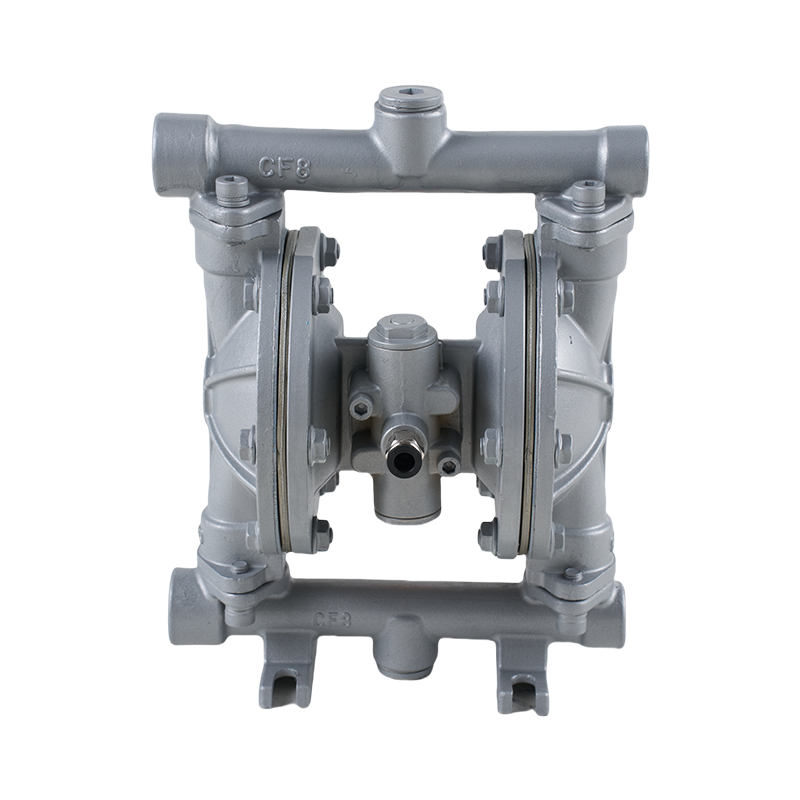
A double diaphragm pump (also called an AODD pump – air-operated double diaphragm) uses compressed air to alternately push two diaphragms back and forth. The two diaphragms are connected by a common shaft (the diaphragm rod). When one diaphragm is on its discharge stroke, the other is on its suction stroke. This design provides smooth, continuous flow with less pulsation than a single diaphragm pump.
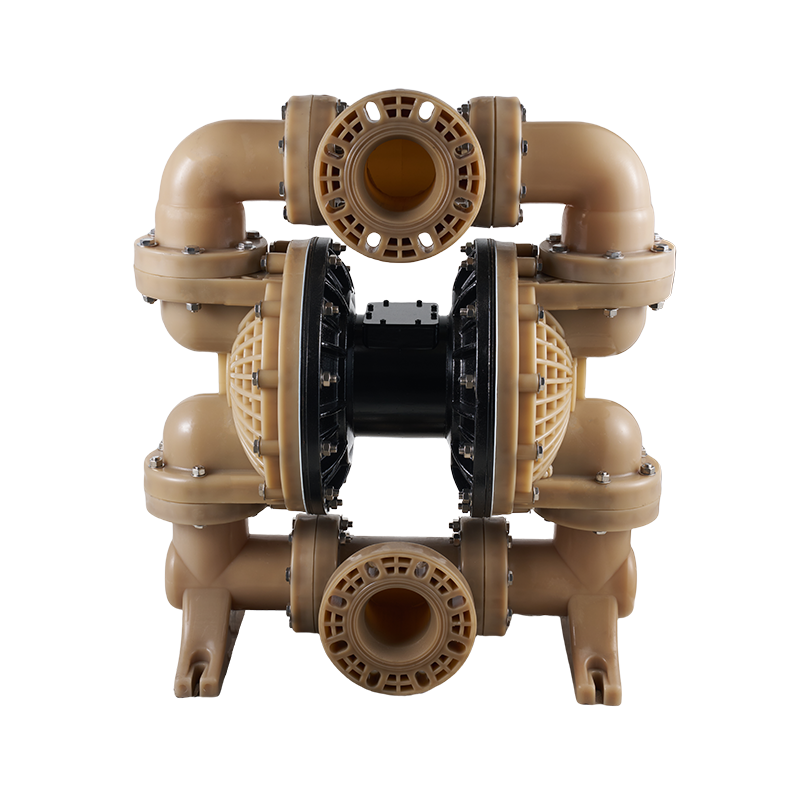
They are used for pumping chemicals, slurries, wastewater, food products (FDA version), abrasive fluids (ceramic slip, sand slurry), and viscous fluids (paints, adhesives, heavy oils). No electrical motor is used; the pump runs entirely on compressed air (2–8 bar, 30–120 psi). The following types are distinguished by housing material, diaphragm material, and port size.
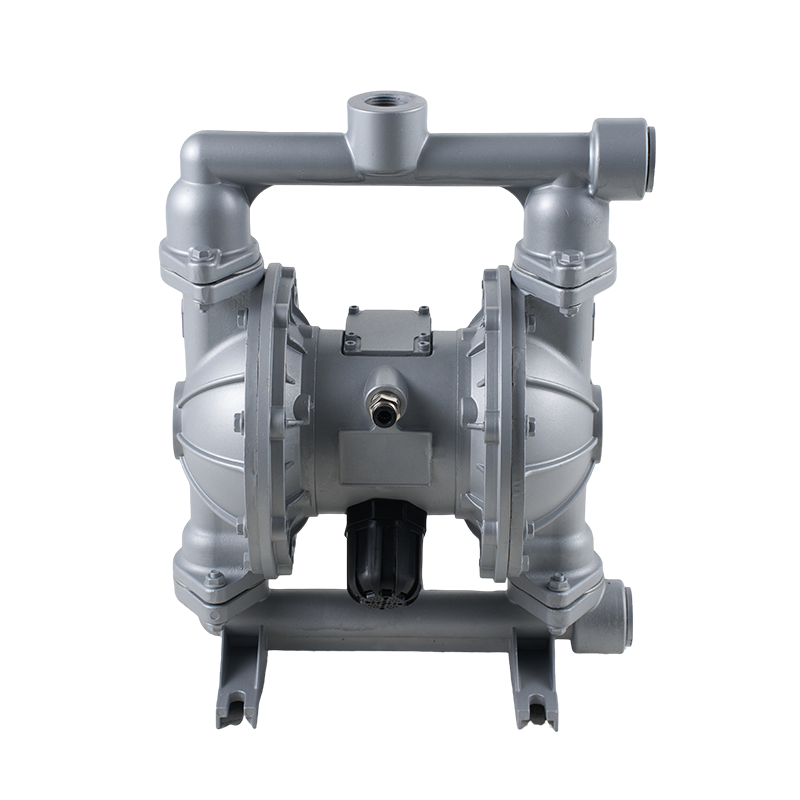
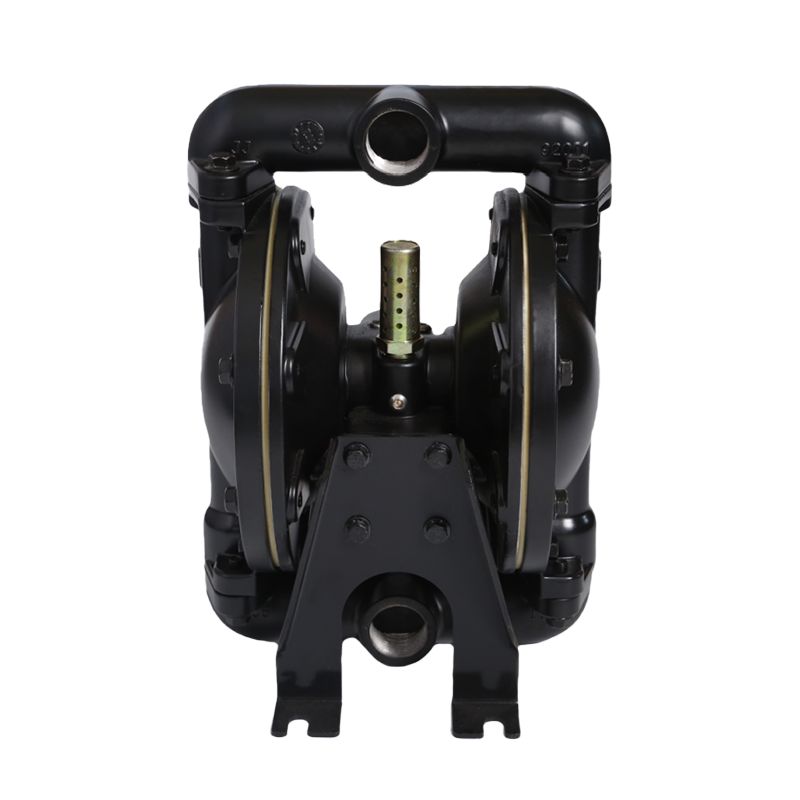
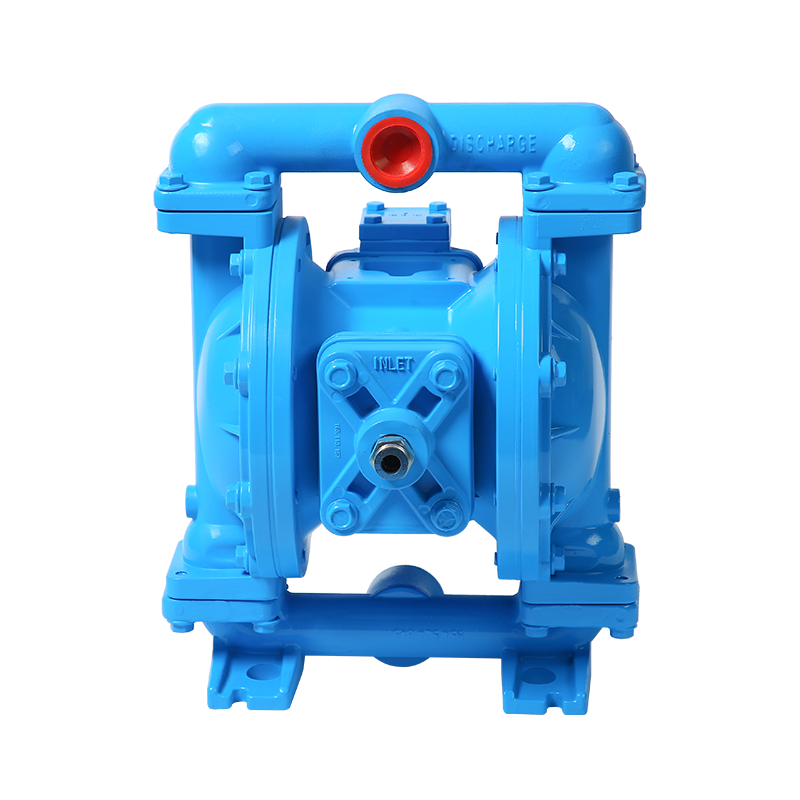
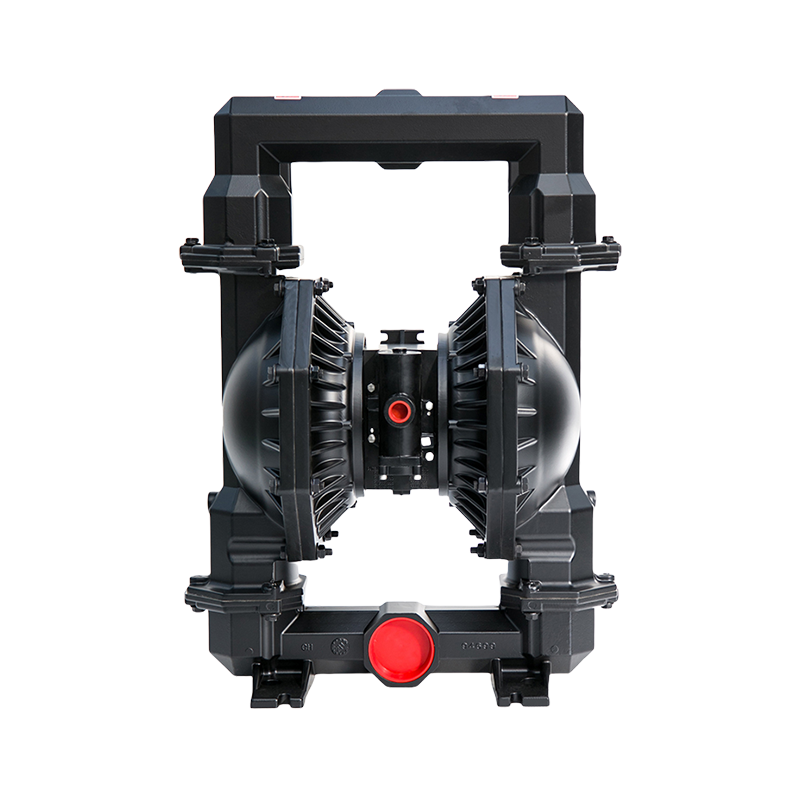
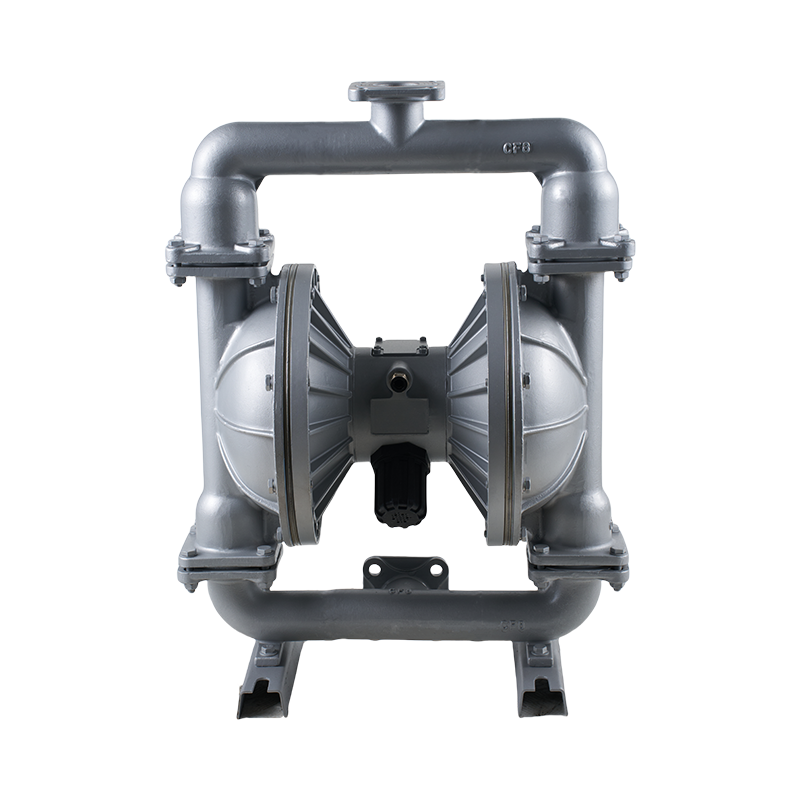
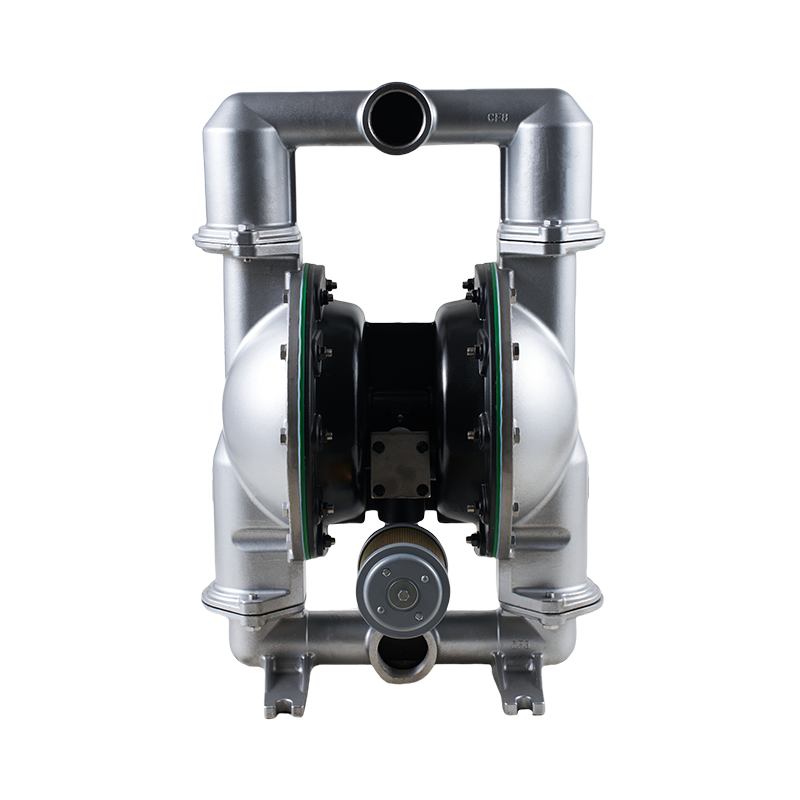
Metallic double diaphragm pump (aluminum, cast iron, or stainless steel). Housing made of aluminum (lightweight, 5–15 kg, for water and mild chemicals), cast iron (heavy, 15–30 kg, for oils and solvents), or 316 stainless steel (corrosion-resistant, for acids, salty fluids, and sanitary applications). These are the most common for industrial use (chemical plants, paint shops, oil transfer). They are heavy duty, with welded or bolted construction. Port sizes: 1/4 inch (6 mm) to 4 inches (100 mm). Flow rates: 20–1,500 L/min. They are noisy (the air exhaust creates 80–95 dB at 1 m). An exhaust muffler (silencer) reduces noise to 70–85 dB.
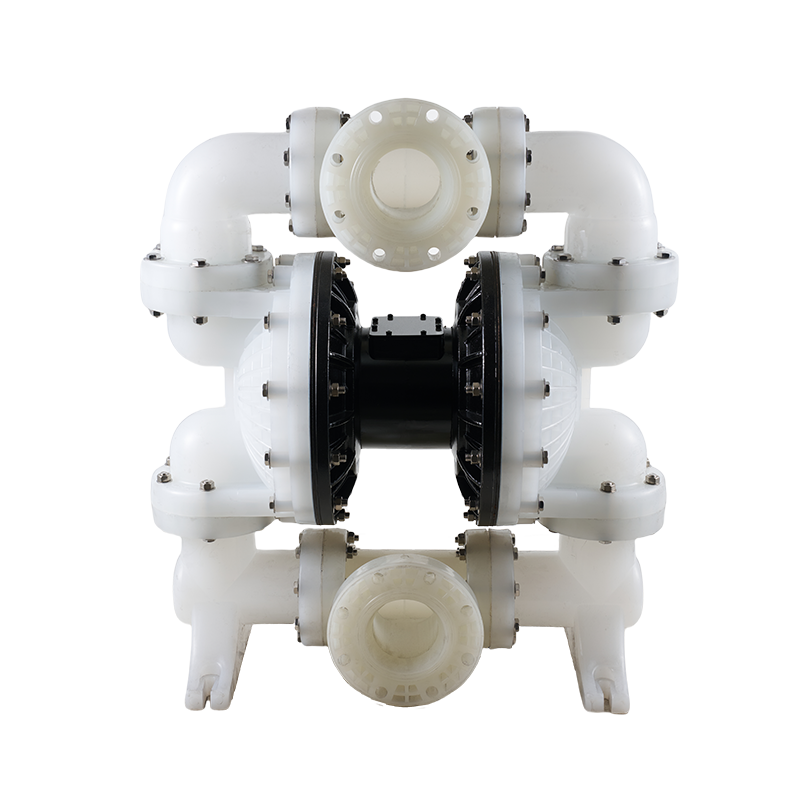
Plastic double diaphragm pump (polypropylene, PVDF, or PTFE). Housing is injection-molded or machined from PP (polypropylene, for most acids and bases, up to 65°C), PVDF (polyvinylidene fluoride, for higher temperature acids, up to 120°C, and for solvents), or PTFE (for extremely corrosive chemicals, like hydrofluoric acid, up to 150°C). Plastic pumps are lighter (2–10 kg) than metallic pumps and do not corrode. They are used in semiconductor manufacturing, electroplating, and chemical transfer where metallic contamination is not allowed. The plastic housing is less abrasion-resistant; pumping sand slurry will erode the internal passages (wear rate 0.5–2 mm per year). Port sizes: 1/4 inch to 2 inches. Flow rates: 10–600 L/min.
Sanitary (FDA) double diaphragm pump. The housing is 316 stainless steel with an electropolished finish (Ra < 0.8 µm). The diaphragms are made of PTFE (with a rubber backing) or FDA-approved EPDM. The pump has quick-disconnect tri-clamp fittings (sanitary flanges) so it can be disassembled for cleaning (CIP – clean-in-place). Used in food processing (chocolate, sauces, dairy, liquid eggs), and pharmaceutical manufacturing (lotions, syrups). The wetted parts (housing and diaphragms) are smooth and crevice-free to prevent bacterial growth. These pumps cost 3–5 times more than standard metallic pumps for the same port size.
Submersible double diaphragm pump. The pump is designed to be fully submerged (in a tank or sump). The air exhaust is piped above the liquid level (using a flexible hose). The pump housing is plastic (PP or PVDF) for chemical resistance. Used for pumping from tanks, pit dewatering, and transferring hazardous liquids (no electrical spark risk). The air motor is sealed; the diaphragms operate underwater. A vertical mounting bracket is often included. Not for heavy slurries (solids settle on the diaphragm). Port sizes: 1/2 inch to 2 inches. Flow rates: 50–400 L/min.
Components Information of the Double Diaphragm Pump
Diaphragms – The Heart of the Pump. Each pump has two diaphragms (one in each fluid chamber). They are circular discs (50–250 mm diameter) clamped between the air housing and the fluid housing. The diaphragm material determines chemical compatibility and flex life (number of cycles before cracking). Common diaphragm constructions:
- Rubber diaphragms (NBR, EPDM, Neoprene, Viton) : Solid rubber, 3–6 mm thick. Molded with a threaded metal insert in the center (where the diaphragm rod attaches). Flex life: 10–30 million cycles (1–3 years of continuous operation). Cost low.
- PTFE diaphragms (fluoropolymer) : Pure PTFE is not flexible; it will crack after 1–2 million cycles. Instead, PTFE diaphragms are a composite: a thin PTFE layer (0.3–0.8 mm) on the fluid side, bonded to a rubber backing (3–5 mm) that provides strength. The PTFE layer resists chemicals; the rubber provides the flex. Flex life: 5–15 million cycles.
- TPE (thermoplastic elastomer) diaphragms (Hytrel, Santoprene) : Excellent abrasion resistance (for slurries). Flex life: 15–25 million cycles. Used for pumping sand, ceramic powder slurries, and aggressive chemicals that would wear out rubber.
Fluid Housing (Wetted Path). The housing that contains the fluid has two chambers (one for each diaphragm). Each chamber has an inlet check valve and an outlet check valve. The fluid enters one chamber while the other is discharging. The housing material is as listed above (metal or plastic). The internal passages must be smooth to avoid trapping debris. For abrasive fluids, the housing should be made of wear-resistant material (cast iron or PTFE-coated aluminum). A standard aluminum housing pumping sand (50 g/L) will show wear (wall thickness loss of 1–2 mm) after 500 hours. A PTFE-lined housing lasts 2,000+ hours.
Check Valves (Ball or Flapper). These one-way valves are located in the inlet and outlet ports of each fluid chamber. When a diaphragm moves forward (discharge stroke), the outlet check valve opens and the inlet check valve closes. When the diaphragm moves back (suction stroke), the inlet opens and the outlet closes. The most common check valve is a ball type: a spherical ball (glass, ceramic, stainless steel, or PTFE) that seats against a ring (the valve seat). The ball lifts when pressure is applied. For abrasive fluids, ceramic balls (alumina, 9 Mohs) outlast stainless steel (which will develop grooves). For sticky fluids (paint, glue), a flapper valve (a thin elastomeric flap) is used because the ball may stick to the valve seat. Ball check valves are more common (80% of pumps).
Copyright © Zhejiang Zhanbo Diaphragm Pump Manufacturing Co., Ltd.

OEM/ODM Diaphragm Pump Manufacturer