

 русский
 Español
 عربى
عربى


What materials are used for diaphragms
 2026.05.15
 Industry News
How do they affect chemical compatibility?
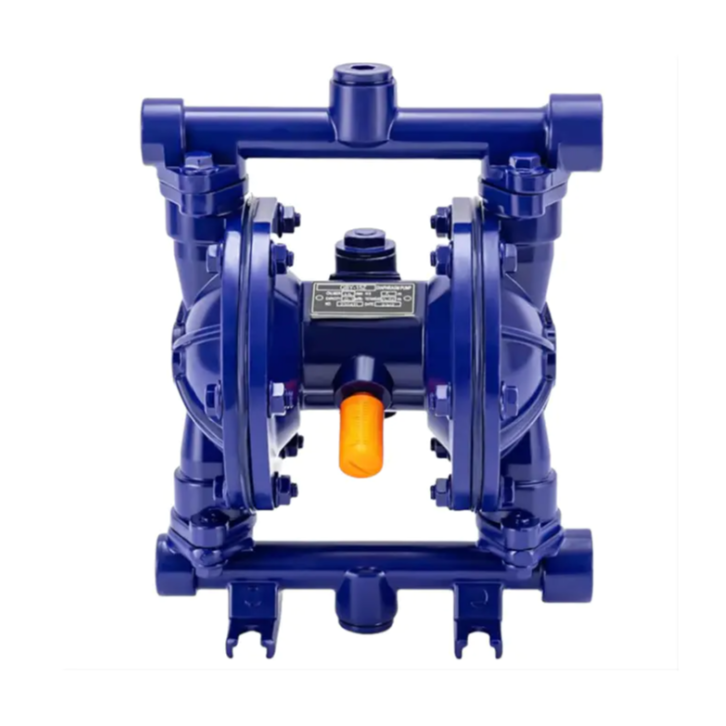
The diaphragm is the heart of the pump. Its material determines which chemicals can be pumped and how long the diaphragm will last. There is no single "universal" diaphragm. The following table (in bullet form) summarizes common materials and their typical chemical resistance. Note that compatibility for specific chemicals may require consulting compatibility charts from manufacturers (like Cole-Parmer or McMaster-Carr), as concentration, temperature, and pressure all matter.
Neoprene (polychloroprene rubber). Good for: water-based fluids (dilute acids and bases), moderate oils (mineral oil, diesel), refrigerants. Not for: strong acids (nitric, sulfuric), strong bases, aromatic solvents (benzene, toluene), or fuels with high aromatic content. Temperature range: -20°C to 95°C. Cost: low. Used in agricultural sprayers and water pumps.
Nitrile rubber (NBR, Buna-N). Good for: petroleum-based fluids (gasoline, diesel, motor oil, hydraulic oil), propane, butane, and aliphatic hydrocarbons. Not for: brake fluid (DOT), ketones (acetone, MEK), chlorinated solvents (methylene chloride), strong acids. Temperature: -30°C to 100°C. Cost: low to moderate. Used in fuel transfer pumps and oil transfer.
EPDM (ethylene propylene diene monomer). Good for: hot water (steam up to 120°C), dilute acids and bases, brake fluid (DOT 3,4), alcohols (methanol, ethanol), many polar solvents (ketones? Actually, EPDM is not good for ketones – check. EPDM is good for alcohols and water, but not for oils or gasoline). Not for: petroleum oils, gasoline, diesel, turpentine, or strong oxidizing acids. Temperature: -40°C to 120°C. Cost: moderate. Used in brake fluid transfer, hot water circulation, and wastewater.
Viton (FKM, fluoroelastomer). Good for: almost all chemicals except those containing fluorine (hydrofluoric acid), low molecular weight alcohols (methanol, butanol may cause swelling over time), and hot bases (concentrated NaOH above 60°C). Excellent for: strong acids (sulfuric, nitric), chlorinated solvents (methylene chloride, trichloroethylene), hydrocarbon fuels (gasoline, diesel, jet fuel), aromatic solvents (toluene, xylene). Temperature: -20°C to 200°C (depending on formulation). Cost: high (5–10× neoprene). Used in chemical processing, high-temperature acid transfer.
How do you reduce pulsation in diaphragm pump flow, and why does pulsation happen?
A diaphragm pump is a reciprocating positive displacement pump. As the diaphragm moves forward, it pushes fluid out (discharge stroke). As it moves backward, it pulls fluid in (suction stroke). The flow is not continuous – it is a series of pulses. The pressure also pulses (from near zero during suction to high pressure during discharge). Pulsation can damage downstream components (pressure gauges, pipes), cause water hammer, and produce annoying noise. Customized pumps often include pulsation dampeners.
Pulsation frequency depends on pump design: A single diaphragm produces one pulse per stroke (e.g., 60 cycles per minute = 60 pulses per minute). A double diaphragm (simultaneous, same phase) still has one pulse per stroke. A "duplex" pump (two diaphragms offset by 180 degrees) cancels some pulsation but not all. A "triplex" (three diaphragms at 120° offset) reduces pulsation to about 5–10% of the peak pressure (smooth enough for many applications). Most customized diaphragm pumps for industrial use are triplex.
Pulsation dampener (also called an accumulator). This is a small tank (0.5–5 L) connected to the discharge line. Inside, a gas-filled bladder or diaphragm separates the gas from the pumped fluid. As the pump pulses, the fluid compresses the gas, which absorbs the energy of the pulse and releases it smoothly. A dampener reduces pulsation by 80–90% (pressure fluctuation drops from ±30% to ±5%). The gas (usually nitrogen, sometimes air) is pre-charged to 60–80% of the average pump discharge pressure. Custom dampeners are sized based on flow rate and pressure.
Bypass loops with a small orifice. Not a dampener but a flow smoother: run a small bleed line from the discharge back to the suction tank (or to the suction line) with a fixed orifice (1–3 mm). The continuous bleed (5–10% of total flow) reduces pressure spikes because the fluid always has a path to recirculate. This is inefficient (wastes energy) but simple and reliable.
Increase the number of strokes (motor speed). If you run a diaphragm pump at 300 strokes per minute instead of 60, the pulses are spaced 0.2 seconds apart instead of 1 second. The flow becomes less "jerky" because the downstream pressure has less time to drop between pulses. However, higher speed increases wear on the diaphragm and check valves. A custom pump can be designed with a variable frequency drive (VFD) so you can adjust the speed for the desired smoothness.
Check valve design affects pulsation as well. Soft check valves (ball or flap) close more slowly and allow some backflow, which actually smooths the pulse slightly. In contrast, hard (poppet) valves snap shut quickly, creating a sharp pressure spike. For applications requiring very low pulsation (e.g., feeding a dosing system), use a pump with soft seated check valves.
Copyright © Zhejiang Zhanbo Diaphragm Pump Manufacturing Co., Ltd.

OEM/ODM Diaphragm Pump Manufacturer