

 русский
 Español
 عربى
عربى


What Does a Chinese Diaphragm Pump Manufacturer Specialize In
 2026.04.24
 Industry News
In industrial fluid handling, diaphragm pumps have become a familiar presence across many production lines and processing systems. They are used in environments where controlled transfer of liquids matters, especially when conditions are not always stable or predictable.
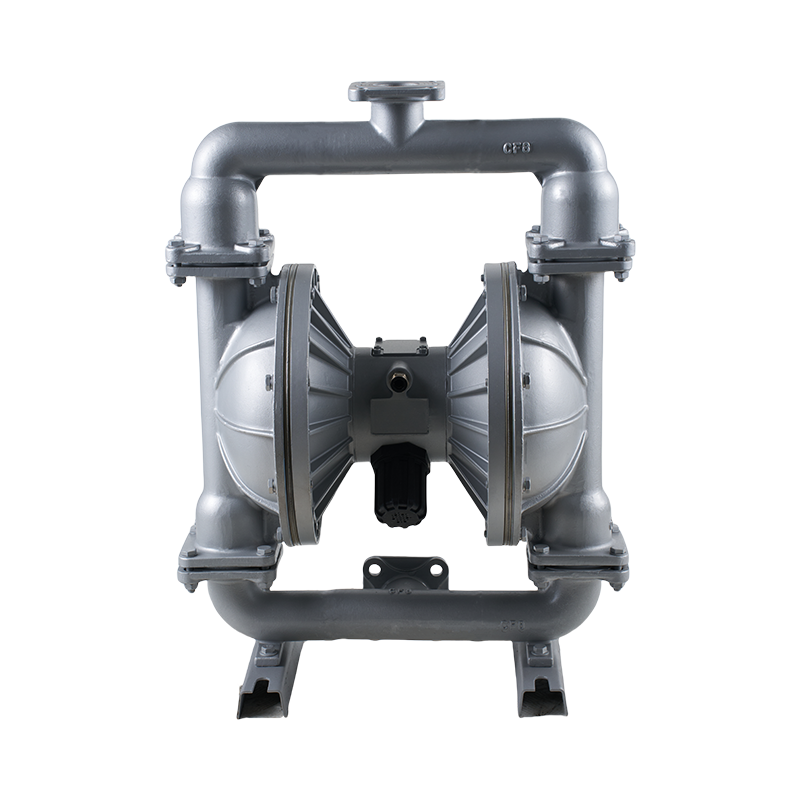
Behind these products, Chinese Diaphragm Pump Manufacturer have built a clear role in the global supply chain. Their focus is not limited to a single function. It stretches across design thinking, material choices, production consistency, and adaptation to different working environments.
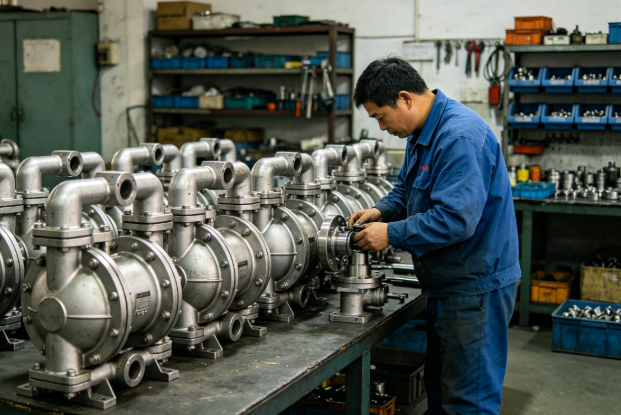
Understanding what they specialize in requires looking at how these manufacturers approach product development and how their solutions fit into real-world applications.
What defines the core focus of a diaphragm pump manufacturer?
At the center of a diaphragm pump manufacturer's work is fluid movement control. The goal is simple on the surface: move liquids from one point to another in a controlled way.
But the conditions vary widely. Some systems deal with clean liquids. Others handle thicker or more reactive substances. The pump must respond to these differences without losing stability.
Manufacturers in China often focus on building systems that can handle a broad range of working conditions. This includes attention to internal structure, movement consistency, and long-term use under repeated operation.
Instead of designing for one narrow use, the emphasis tends to be on adaptability. That flexibility is one of the reasons these products appear in many different industries.
Why is material selection such a central part of production?
Material choice plays a quiet but important role in how a pump performs. It influences durability, resistance, and how the system reacts under pressure or continuous use.
Chinese diaphragm pump manufacturers often work with different material combinations depending on the intended environment. Some applications require stronger resistance to wear. Others need smoother internal surfaces to support stable flow.
This decision is rarely random. It is shaped by how the pump will be used in practice. A pump used in steady conditions may prioritize long-term consistency. One used in changing environments may require more flexibility in structure.
Material selection becomes a foundation rather than a detail. It affects everything that comes after.
How do manufacturers approach structural design?
Different application needs often to different design priorities. The comparison below shows how usage conditions shape manufacturing focus:
| Usage Condition | Main Expectation | Design Attention Area |
|---|---|---|
| Stable environment | Steady operation | Consistent internal balance |
| Changing environment | Flexible response | Structural adaptability |
| Long operation cycles | Reduced variation | Wear resistance focus |
| Mixed fluid handling | Flow stability | Material compatibility |
This kind of variation is common in diaphragm pump production. It explains why manufacturers rarely follow a single fixed design direction.
What industries rely on diaphragm pumps from China?
Diaphragm pumps are not limited to one type of application. They appear in many different working environments, each with its own expectations.
Some common usage areas include:
- Chemical handling systems
- Water treatment environments
- Coating and surface processing setups
- Fluid transfer in manufacturing lines
- General industrial circulation systems
Each environment places different demands on the pump. Some require steady operation over long periods. Others need the ability to handle changing conditions without interruption.
Manufacturers adjust their design thinking to meet these varied needs. This is where flexibility becomes important again.
How do manufacturers ensure stable operation over time?
Stability is not achieved through a single design choice. It comes from a combination of factors working together.
One of these factors is consistency in assembly. Even small differences in construction can affect how the pump behaves during repeated use.
Another factor is internal balance. When components work in harmony, the system maintains a smoother rhythm. When imbalance appears, irregular movement can follow.
Testing and inspection also play a role. Instead of focusing only on initial performance, attention is given to how the pump behaves under continuous cycles.
Over time, this approach helps reduce unexpected variation in operation.
What challenges are common in diaphragm pump production?
Even with mature production systems, challenges still appear. They are often related to balance, wear, and changing operating conditions.
One common challenge is maintaining consistent output across long periods. As parts gradually experience wear, small differences can appear in performance.
Another challenge involves adapting to different working environments. A pump that performs well in one setting may need adjustment for another.
There is also the issue of long-term reliability. Continuous use introduces natural changes in internal behavior. Managing these changes requires careful attention during production planning and material selection.
These challenges are not unusual. They are part of how mechanical systems interact with real-world use.
How does customization influence manufacturing direction?
Customization has become an important part of diaphragm pump manufacturing. Instead of producing identical units for every situation, manufacturers often adjust design features based on usage needs.
This may involve changes in structure, material combination, or overall configuration. The aim is to better match the pump to its environment.
Customization also reflects the diversity of industrial requirements. No single design fits every scenario. Small adjustments can make a noticeable difference in performance stability and usability.
For manufacturers, this means maintaining flexibility in production while keeping consistency in quality.
What role does operational environment play in pump performance?
The environment where a pump operates can influence its behavior over time. Temperature changes, surrounding conditions, and usage patterns all contribute to how the system performs.
In more stable environments, pumps tend to maintain consistent behavior. In changing conditions, adjustments may be needed more frequently.
Manufacturers consider these factors during design. The goal is to create systems that can handle variation without losing basic stability.
This is not about eliminating change, but about managing it in a controlled way.
How do diaphragm pump manufacturers balance performance and simplicity?
There is often a balance between how advanced a system is and how easy it is to use. More complex systems may offer flexibility, but they can also require more attention. Simpler systems are easier to handle, but may not adapt as easily to different conditions.
Chinese diaphragm pump manufacturers often work within this balance. The focus is on creating systems that remain manageable while still supporting a range of uses.
This balance shows up in structure, operation, and maintenance requirements. It influences how users interact with the pump throughout its lifecycle.
What does long-term use reveal about manufacturing priorities?
Over time, the behavior of a pump reveals the decisions made during its design and production.
If the system maintains stable operation over repeated cycles, it reflects careful attention to balance and structure. If variations appear earlier, it may point to areas where adjustment is needed.
Long-term use is often where manufacturing choices become visible. It shows how well different elements work together under real conditions.
For manufacturers, this feedback loop is part of ongoing improvement. Each application adds new insight into how systems behave beyond initial expectations.
Copyright © Zhejiang Zhanbo Diaphragm Pump Manufacturing Co., Ltd.

OEM/ODM Diaphragm Pump Manufacturer