

 русский
 Español
 عربى
عربى


What Is a Wastewater Treatment Diaphragm Pump and How Does It Work
 2026.09.15
 Industry News
Wastewater treatment involves much more than moving dirty water from one place to another. Treatment facilities handle liquids with different levels of solids, changing consistencies, chemical contents, and treatment requirements. Each stage needs a suitable way to move material through the system.This is where a wastewater treatment diaphragm pump can become useful.
A diaphragm pump uses a flexible diaphragm to create a pumping action. The movement of the diaphragm changes the space inside the pump. Valves then control the direction of liquid movement. As the diaphragm moves back and forth, liquid is drawn into the pump and pushed toward the discharge side.
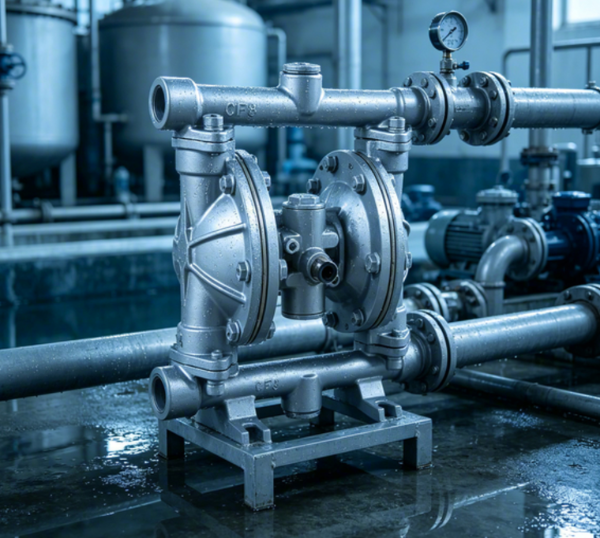
The basic idea is simple. Its value comes from how that pumping action can be applied to different wastewater conditions.
Diaphragm pumps can be used for sludge transfer, chemical handling, liquid movement, and other treatment-related tasks. EPA wastewater treatment guidance identifies diaphragm pumps among the pump types used for sludge and notes their suitability for certain difficult or chemically sensitive applications.
As wastewater treatment systems become more carefully organized, the pump is no longer viewed as an isolated component. It becomes part of the movement and control of material throughout the treatment process.
What Is a Wastewater Treatment Diaphragm Pump ?
A diaphragm pump is a pump designed to move liquids used or produced during wastewater treatment.
Its defining feature is the diaphragm. Instead of relying on a rotating impeller to move the liquid, the pump uses the repeated movement of a flexible barrier. This movement creates suction on one side and discharge pressure on the other.
The pump normally includes a pumping chamber, a diaphragm, and valves that control liquid movement. The diaphragm separates the pumped liquid from the driving mechanism. This arrangement can be useful when the liquid contains solids or when the pumped material needs to remain separated from other parts of the pump.
The basic pumping sequence can be understood through four simple actions:
- The diaphragm moves back. This creates space inside the chamber and draws wastewater or sludge into the pump.
- The inlet valve allows liquid to enter. The valve helps control the direction of movement.
- The diaphragm moves forward. The available space inside the chamber becomes smaller.
- The outlet valve opens for discharge. The liquid is pushed toward the next part of the treatment system.
The cycle then repeats.
This operating principle gives diaphragm pumps a distinctive place in wastewater applications. EPA materials describe diaphragm pumps as one type of positive displacement pump used in wastewater treatment, particularly for sludge-related duties.
How Does a Diaphragm Pump Move Wastewater?
The pumping process begins inside the chamber. When the diaphragm moves in one direction, the volume inside the chamber changes. This creates the conditions needed to draw liquid into the pump.
When the diaphragm moves in the opposite direction, the chamber volume decreases. The liquid is then pushed toward the outlet.
The inlet and outlet valves play an important role in keeping the flow moving in the intended direction. They open and close according to the pressure conditions created by diaphragm movement.
This makes the pump a controlled displacement device. Each movement of the diaphragm helps move a portion of the liquid through the system.
The principle can be useful for wastewater because treatment liquids are not always clean or uniform. Sludge may contain suspended material. Some wastewater streams may contain chemicals. Other liquids may have a thicker consistency than ordinary water.
The diaphragm separates the pumped liquid from the driving side of the pump. This can reduce direct contact between the liquid and moving mechanical components.
That feature also helps explain why diaphragm pumps appear in different parts of wastewater treatment operations. The same basic pumping principle can be adapted to different tasks by changing the pump design and materials to suit the application.
Why Are Diaphragm Pumps Used for Wastewater Sludge?
Sludge is one of the more challenging materials found in wastewater treatment.
It is not simply water. It can contain concentrated solids and organic material. Its consistency can also change during treatment. A pump that works well with relatively clean water may not be the right choice for thicker sludge.
Diaphragm pumps can be used to move sludge because their pumping action does not depend on a conventional rotating impeller passing through the liquid.
This can be useful when the material contains suspended solids. The diaphragm moves as a flexible barrier, while valves manage the movement into and out of the chamber.
EPA wastewater treatment guidance lists diaphragm pumps among the positive displacement pump types used for sludge. It also notes that diaphragm pumps can be suitable for applications where abrasion or chemical leakage is a concern.
Sludge transfer can take place at different points in a treatment facility. For example, sludge may need to move from a settling area to another treatment stage. It may also be transferred toward thickening, conditioning, storage, or dewatering.
The exact application depends on the treatment process.
What matters is that the pump needs to match the characteristics of the sludge. A thicker material may behave differently from a relatively diluted sludge stream. Solids content, particle characteristics, chemical content, and temperature can all influence equipment selection.
For this reason, a wastewater treatment diaphragm pump should not be selected simply because it is called a sludge pump. The actual material needs to be considered.
Can a Diaphragm Pump Handle Liquids Containing Solids?
Wastewater often contains suspended particles. Some treatment streams can contain more solids than others.
A diaphragm pump can be suitable for certain liquids containing suspended material because the pumping action does not rely on a fast rotating impeller moving directly through the liquid.
The design of the pump still matters. The valves, diaphragm, chamber, and passages need to suit the liquid being handled. Large or unsuitable solids can create problems if the pump is not designed for them.
This is why wastewater treatment operators need to understand what is actually being pumped.
A liquid containing fine suspended material presents a different situation from one containing larger debris. Sludge that has already passed through another treatment stage may also behave differently from untreated wastewater.
The following factors can influence whether a diaphragm pump is suitable:
| Wastewater characteristic | Why it matters |
| Solids content | Influences how easily the material can move through the pump |
| Sludge consistency | Affects the pumping behavior of the liquid |
| Chemical content | Determines material compatibility |
| Particle size | Can influence valve and passage selection |
| Temperature | May affect the diaphragm and other wetted components |
| Treatment stage | Helps define what type of material the pump will handle |
The pump therefore needs to be considered as part of the complete treatment process rather than as a standalone piece of equipment.
How Can a Diaphragm Pump Be Used for Chemical Handling?
Wastewater treatment often involves chemical addition. Chemicals may be used to adjust water conditions, support solids separation, control unwanted substances, or assist other treatment processes.
A diaphragm pump can be used to move and dose certain treatment chemicals.
The pumping principle is useful here because the diaphragm creates a physical separation between the pumped liquid and the driving mechanism. The pump can be designed with materials that are compatible with the chemical being handled.
Chemical compatibility is an important consideration. Not every diaphragm material or valve material is suitable for every liquid.
The pump must therefore be selected according to the characteristics of the chemical. This includes its concentration, compatibility with wetted materials, and the way it behaves during pumping.
In wastewater treatment, chemical dosing can influence other stages of the process. For example, chemical addition can support coagulation, flocculation, disinfection, or other treatment activities. EPA material on liquid feed systems also identifies diaphragm pumps as one option for chemical feeding.
The connection between pumping and treatment is therefore quite direct. The pump is responsible for moving the chemical into the process, while the treatment system determines how that chemical is used.
A suitable pump helps make this movement controlled and repeatable.
Where Does a Wastewater Treatment Diaphragm Pump Fit Into the Treatment Process?
There is no single location where every diaphragm pump is used.
Its application depends on the layout of the treatment system and the material that needs to be moved.
One pump may be used to transfer sludge from a settling process. Another may move conditioned material toward a dewatering stage. A smaller diaphragm pump may be used to introduce a treatment chemical into a wastewater stream.
The pump can therefore appear at different points in the process.
| Treatment area | Possible diaphragm pump role |
| Sludge collection | Move accumulated sludge toward another process |
| Sludge treatment | Transfer material between treatment stages |
| Dewatering preparation | Feed sludge toward dewatering equipment |
| Chemical storage | Move treatment chemicals from storage |
| Chemical dosing | Introduce chemicals into the treatment process |
| Wastewater transfer | Move selected liquid streams within the facility |
| Process support | Supply or transfer liquids required by a treatment stage |
The same pumping principle can support different tasks, but the pump configuration should match each application.
A sludge pump may need to deal with suspended solids and changing consistency. A chemical dosing pump may need materials that can tolerate the chemical. A liquid transfer pump may have different requirements again.
This flexibility is one reason diaphragm pumps remain relevant in wastewater treatment.
What Makes a Diaphragm Pump Different From Other Wastewater Pumps?
Wastewater treatment uses several types of pumps. Each has a different operating principle and is suited to different duties.
A centrifugal pump uses a rotating impeller to move liquid. It can be useful for many relatively fluid wastewater streams.
A diaphragm pump works through repeated diaphragm movement. This makes it a positive displacement pump. The pumping chamber fills and empties as the diaphragm moves.
The difference becomes more noticeable when the liquid becomes thicker or contains more suspended material.
| Pump type | General pumping principle | Common consideration |
| Centrifugal pump | Rotating impeller moves liquid | Often suited to fluid liquids |
| Diaphragm pump | Flexible diaphragm moves liquid through a chamber | Useful for selected sludge and chemical duties |
| Plunger pump | Reciprocating plunger displaces liquid | Can be used for certain difficult liquid applications |
| Progressive cavity pump | Rotating element moves material through a cavity | Often considered for thicker sludge |
There is no universal pump for every wastewater application.
The right choice depends on the material, treatment stage, required movement, installation conditions, and maintenance approach.
Diaphragm pumps can be attractive when the application benefits from positive displacement pumping and separation between the pumped liquid and the driving mechanism.
What Should Be Considered When Choosing a Wastewater Treatment Diaphragm Pump?
Choosing a diaphragm pump starts with understanding the liquid.
The word "wastewater" covers many different materials. A relatively clear treated stream is very different from thick sludge. A chemical solution has different requirements from either of them.
The pump should therefore be matched to the actual application.
Several areas deserve attention:
The liquid being pumped.
Understand whether the material is wastewater, sludge, slurry, or a chemical solution. Its consistency and contents can affect pump selection.
Solids and particles.
If the liquid contains suspended material, the pump should be suitable for that type of material. Valve and passage design can become important.
Material compatibility.
The diaphragm, valves, seals, and other wetted components need to be compatible with the liquid.
Flow requirements.
The pump should fit the movement required by the treatment process. The application may involve steady transfer, intermittent pumping, or controlled dosing.
Installation conditions.
Available space, pipe arrangement, liquid source, and discharge location can all affect how the pump is installed.
Maintenance access.
Wastewater equipment operates in demanding environments. Easy access for inspection and replacement can make routine maintenance more manageable.
Process integration.
The pump should work with the rest of the treatment system. Its operation should fit the stages before and after it.
Maintenance also deserves attention after installation. The diaphragm and valves are important working parts. Their condition can influence pumping performance. Regular inspection can help identify wear, leakage, blockage, or other problems before they affect the wider process.
A wastewater treatment diaphragm pump is therefore more than a device that moves liquid. It is a controlled part of a larger treatment chain. Its value comes from matching its simple pumping principle with the specific material and process it is expected to handle.

Copyright © Zhejiang Zhanbo Diaphragm Pump Manufacturing Co., Ltd.

OEM/ODM Diaphragm Pump Manufacturer