

 русский
 Español
 عربى
عربى

 Home / Blogs / Industry News / What Makes China Diaphragm Pump Factory Competitive in the Global Market
 What Makes China Diaphragm Pump Factory Competitive in the Global Market
 2026.05.15
 Industry News
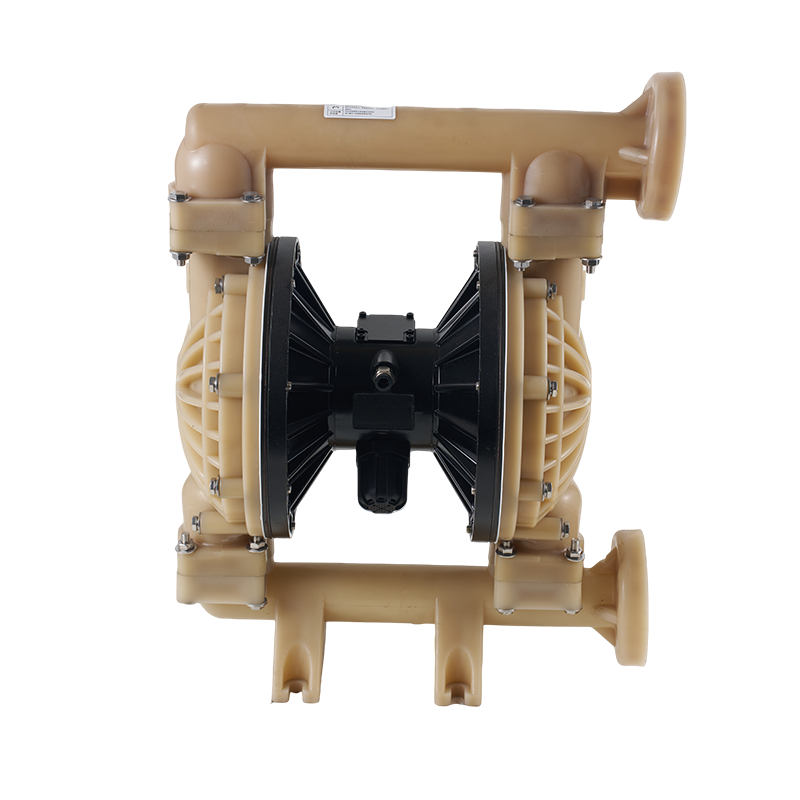
Global demand for fluid handling equipment has grown quietly but steadily across many industries. In that landscape, China Diaphragm Pump Factory have become a familiar presence. They appear in environments where liquids need controlled movement, sometimes smooth, sometimes demanding, sometimes unpredictable.
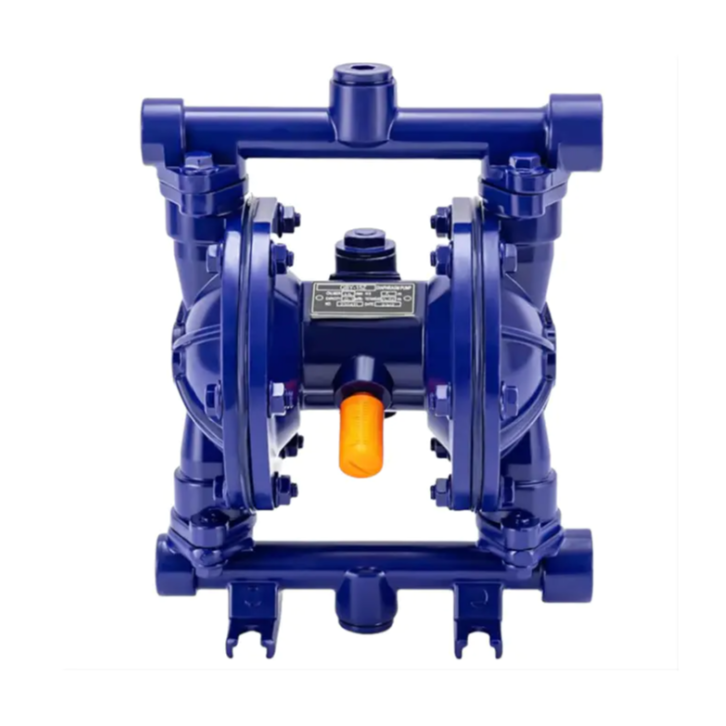
Over time, factories in China have become a consistent part of this supply chain. Not in a sudden way, but through gradual expansion of capability, communication, and adaptability. The question is less about presence now and more about what keeps them relevant in different markets with different expectations.
Why do buyers keep turning to China diaphragm pump factories?
At glance, the answer might seem simple. Availability and scale play a role. But the real picture is more layered.
Many buyers start with practical concerns. They need equipment that fits operational needs without unnecessary complexity in sourcing. Chinese factories often respond with flexible communication and a willingness to adjust details during early discussions.
There is also a sense of accessibility. Information is shared in a straightforward way. Questions are answered without long delays. This reduces uncertainty during decision-making, especially for international buyers working across time zones.
What stands out is not only the product itself, but the ease of interaction around it.
How does production structure influence competitiveness?
Inside many factories, production is not treated as a single block. It is divided into smaller, repeatable stages. This helps maintain consistency even when orders vary in size or requirements.
The flow usually feels steady rather than rushed. Materials move through different steps in a controlled sequence. Workers become familiar with repeating patterns, which helps reduce variation in output.
This structure does not depend on complexity. In fact, simplicity often plays a larger role. When processes are clear, adjustments become easier to manage without disrupting the whole system.
Over time, this kind of organization supports a rhythm that buyers can rely on.
What role does flexibility play in global competitiveness?
Markets outside China rarely behave in the same way. Requirements shift from one region to another. Even within the same industry, expectations can differ.
Factories that respond well to these differences tend to maintain stronger relationships with buyers. Flexibility is not just about accepting requests. It is also about understanding when changes are practical and when they might affect stability.
Some manufacturers approach this through dialogue. Instead of immediately agreeing or refusing, they ask follow-up questions. That small step often changes the direction of cooperation.
Flexibility here is less about speed and more about balance. Too rigid creates friction. Too loose creates inconsistency. The middle space is where long-term cooperation usually forms.
How is quality perception shaped without overstatement?
Quality is often discussed in broad terms, but in practice it is built from smaller visible signals.
Surface consistency, assembly alignment, and handling of details during packaging all contribute to how a product is perceived. None of these elements alone define quality, but together they create an impression of care.
Factories that maintain stable output tend to focus on repeatable processes. Not every product is identical, but variation stays within a controlled range. This helps reduce surprises when products are used in real environments.
Interestingly, buyers often notice quality not during inspection, but during use. Stability over time becomes the real reference point.
Why does communication style matter so much?
Cross-border cooperation depends heavily on communication clarity.
Some factories respond in a very direct way. Questions are answered without extra explanation. Others include more context, sometimes anticipating follow-up questions before they are asked.
Neither approach is inherently better. What matters is consistency. When communication style remains steady, expectations become easier to manage.
Delays and unclear responses tend to create uncertainty. Not necessarily because of the issue itself, but because it interrupts the flow of understanding between both sides.
In many cases, buyers evaluate reliability through communication long before they evaluate the product itself.
How do factories manage variation in demand?
Demand rarely stays constant. Orders may increase, decrease, or change in structure. Factories that operate across multiple markets become familiar with this pattern.
Instead of treating variation as disruption, many adapt through scheduling and internal adjustment. Production lines may shift focus depending on order priority or timing.
What matters here is predictability. Even when changes occur, buyers tend to prefer transparency over sudden adjustments. A clear explanation of timing or capacity feels more manageable than uncertainty.
This approach does not remove variation, but it makes it easier to navigate.
What influence does customization have on competitiveness?
Customization has become a common expectation rather than an exception.
Different applications require different configurations. Factories that handle this well tend to listen carefully before making adjustments. Small details are often confirmed before production begins.
This step may slow the process slightly, but it reduces confusion later. It also helps align expectations between both sides.
There is a subtle balance involved. Too much customization without structure can complicate production. Too little can limit suitability. Factories that stay competitive often find a middle path that keeps both flexibility and control in place.
How do logistics and handling shape international trust?
Once production is complete, another stage begins. Movement of goods across borders introduces its own set of variables.
Packaging, timing, and coordination all influence how smoothly products arrive. Even small issues during handling can affect perception of reliability.
Factories that treat this stage with the same attention as production tend to build stronger long-term cooperation. Care in preparation often reflects care in earlier steps as well.
Buyers notice these patterns over time. A consistent arrival experience becomes part of the overall impression of reliability.
What practical factors do global buyers usually compare?
When comparing suppliers, buyers rarely focus on a single element. Instead, they observe a combination of small signals.
| Factor | What is often observed | Why it matters |
|---|---|---|
| Communication | clarity and timing | reduces confusion |
| Production flow | stability of output | supports planning |
| Response to changes | willingness and structure | affects flexibility |
| Product consistency | visual and functional uniformity | builds trust over time |
| Order handling | coordination and packaging | affects delivery experience |
These points are rarely checked once. They tend to be observed across multiple interactions before decisions are made.
How does long-term cooperation shape competitiveness?
Competitiveness is not only about entering markets. It is also about staying in them.
Long-term cooperation changes how factories operate. Feedback from repeated buyers influences adjustments in workflow and communication. Over time, this feedback loop becomes part of internal improvement.
Trust develops slowly. It is built through repeated interactions where expectations are met in a steady way rather than a dramatic one.
Factories that maintain this kind of relationship often become part of ongoing supply chains rather than one-time suppliers.
What defines the overall position in the global market?
There is no single factor that explains competitiveness. It comes from overlapping elements that work together.
Communication reduces distance. Production structure supports consistency. Flexibility allows adaptation. Handling and coordination complete the experience.
None of these stand alone. Each one influences the others in subtle ways.
Over time, what remains noticeable is not a single feature, but a pattern of reliability that becomes familiar through repeated cooperation.
Copyright © Zhejiang Zhanbo Diaphragm Pump Manufacturing Co., Ltd.

OEM/ODM Diaphragm Pump Manufacturer