

 русский
 Español
 عربى
عربى


How To Choose A Cheap Diaphragm Pump Without Sacrificing Quality
 2026.05.29
 Industry News
In many industries, diaphragm pumps are used in quiet but essential roles. They move liquids, handle transfer tasks, and support a wide range of systems that depend on stable flow. When budgets are tight, attention often turns to lower-cost options. The challenge is not just finding a cheap diaphragm pump, but finding one that still performs reliably in real conditions.
Price alone does not tell the full story. A lower cost may come from simpler design choices, different materials, or reduced finishing steps. None of these automatically mean poor performance. The key is understanding where compromises exist and whether they matter for the intended use.
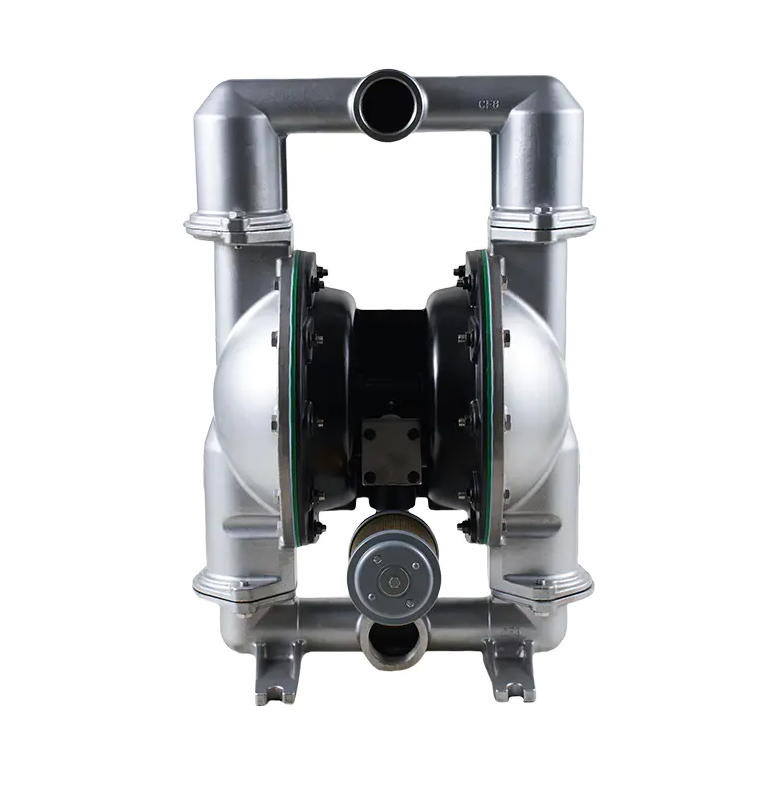
This topic often appears in procurement discussions, especially in small operations or expanding projects. Decisions are rarely based on one factor. Instead, they come from a mix of performance needs, operating conditions, and long-term expectations.
What Will The Cheap Diaphragm Pump Be Used For In Real Operation?
Before picking out a pump, the basic real‑world question is how it will actually be used day‑to‑day. This single factor guides nearly every other choice you make later on.
Some pumps only move clean, thin liquids, while others have to handle thicker fluids or materials with unpredictable properties. A setup that runs well in one working environment might not perform the same somewhere else.
For jobs that run non‑stop over long periods, steady flow is really important. For short‑time, occasional use, small shifts in flow usually don't cause problems. But if the pump runs for hours on end, even tiny inconsistencies start to add up and become obvious over time.
Where the pump sits also makes a big difference. Indoor installations tend to have steady, controlled conditions. Outdoor or portable pumps deal with shifting temperatures, vibration from movement, and extra exposure to dust or moisture.
Knowing exactly what real‑world tasks the pump needs to handle keeps buyers from choosing purely based on price. It pushes people to focus on whether the pump fits the job, instead of just how it looks on paper.
How Does Build Quality Show Up In Lower-Cost Pumps?
Budget‑friendly pumps usually use more straightforward construction. That doesn't mean they don't work well—it just means they skip extra fancy features and polished finishing touches.
You can spot decent build quality by checking the main body first. Even on cheaper models, a solid base and neat, consistent assembly mean the pump will hold up better long‑term.
Another simple check is how it runs. When the pump is working, its movement should feel smooth and steady. Shaky or uneven running often points to internal parts that aren't balanced properly.
Seals and connection joints are also worth looking at. These spots take constant stress every time the pump runs. Even on low‑cost options, fittings should feel tight and secure, not loose or wobbly.
Good build quality rarely stands out right when you look at the pump. You really notice it once you start putting it through regular real‑world use.
What Materials Are Common In Cost-Focused Designs?
The materials used directly control both the pump's price and how long it lasts. For more affordable diaphragm pumps, manufacturers pick materials that strike a practical balance.
Some internal parts need to stay flexible, so they can keep moving under pressure without cracking or wearing out fast. Other pieces are built for strength, to keep the whole pump stable through repeated cycles.
Outer casings often use lighter‑weight, cheaper materials to bring overall costs down. Inside, different components use different materials based on what each one needs to do.
Not every single piece needs premium‑grade material to work well. What counts is that each part uses the right material for its specific job inside the pump.
A simple comparison can help clarify expectations:
| Component Area | Typical Focus | What To Check In Budget Options |
|---|---|---|
| Pump body | Structural stability | No visible weak points |
| Internal movement | Smooth repeated motion | Consistent operation feel |
| Connection points | Sealing and stability | Firm fit without looseness |
| External casing | Protection and support | Even surface and alignment |
Material choice becomes more meaningful when connected to actual usage conditions rather than general assumptions.
How Important Is Flow Stability In Budget Pumps?
Flow stability is often the point where differences become noticeable.
A pump may start smoothly but behave differently over time. Small variations in output can appear under continuous use. These changes are not always immediate, but they can influence system performance.
In simple applications, slight variation may not be critical. In more sensitive setups, consistency becomes more important.
Observing how the pump behaves during extended operation is often more useful than short testing. Short tests may not reveal small fluctuations that appear later.
Stability is not only about output. It also includes how the pump responds to changes in load or resistance within the system.
What Role Does Maintenance Play In Long-Term Value?
A lower purchase cost does not automatically mean lower long-term value. Maintenance plays a large role in how a pump performs over time.
Some designs are easier to clean and inspect. Others may require more effort to access internal parts. This difference affects how quickly issues can be addressed.
Wear is natural in moving systems. What matters is how easily worn parts can be checked or replaced.
In practical use, simple maintenance routines often extend service life more than expected. Cleaning, inspection, and occasional adjustments help keep performance steady.
A pump that is slightly more basic but easy to maintain may perform better over time than a complex one that is difficult to service.
How Can A Buyer Evaluate Quality Before Use?
Without running the pump for long periods, evaluation often relies on observation and simple checks.
Movement feel is one indicator. A consistent rhythm during operation usually suggests balanced internal structure.
Sound can also provide clues. While no pump is completely silent, unusual variation in noise may indicate uneven internal motion.
Fit and finish give additional hints. Parts that align well and feel secure often reflect more controlled production.
Packaging and documentation are sometimes overlooked, but they can reflect the level of attention given during production.
These checks do not guarantee long-term performance, but they help reduce uncertainty before purchase.
What Trade-Offs Usually Appear In Low-Cost Options?
Cost-focused designs often involve balance rather than elimination of features.
Some pumps may prioritize simplicity over extended durability features. Others may reduce material thickness in non-critical areas.
Control precision may also differ slightly. For general applications, this is often acceptable. For sensitive systems, it may require attention.
Not every trade-off affects usability in a meaningful way. The key is identifying which differences matter for the intended application.
A useful way to think about it is separating appearance differences from functional differences. The latter has more impact on real performance.
How Does Application Environment Influence Choice?
The same pump can behave differently depending on where it is used.
Stable indoor environments tend to be more forgiving. Outdoor or mobile conditions introduce more variables.
Temperature changes, movement, and exposure to dust or moisture can all affect performance.
In harsher environments, even a low-cost pump may need stronger structural support. In controlled environments, simpler designs may be sufficient.
This is why application context is often more important than product category.
What Should Be Checked During Early Use?
The period of use often reveals more than initial inspection.
Smooth startup behavior is one sign. If the pump begins operation without hesitation, it usually indicates stable assembly.
Consistency during repeated cycles is another factor. Early irregularities may point to adjustment needs.
Connection stability should also be monitored. Small shifts or looseness can become more noticeable over time.
Below is a simple overview of key evaluation points:
| Observation Area | What It Indicates |
|---|---|
| Startup behavior | Basic internal alignment |
| Continuous flow | Stability under operation |
| Noise pattern | Internal balance condition |
| Connection stability | Assembly quality |
Early use is often where practical quality becomes visible.
How Can Buyers Balance Cost And Reliability?
Finding balance is less about choosing extremes and more about matching expectations.
A lower-cost diaphragm pump can still perform well when used within suitable conditions. Problems often appear when expectations exceed design intent.
Clear understanding of usage needs helps narrow choices. Instead of focusing only on price, attention shifts to compatibility.
In many cases, long-term satisfaction comes from alignment between function and environment rather than product tier.
Small adjustments in selection criteria can find to more stable outcomes without significantly increasing cost.

Copyright © Zhejiang Zhanbo Diaphragm Pump Manufacturing Co., Ltd.

OEM/ODM Diaphragm Pump Manufacturer