

 русский
 Español
 عربى
عربى


Common Problems in Cast Iron Diaphragm Pump and How to Fix Them
 2026.06.05
 Industry News
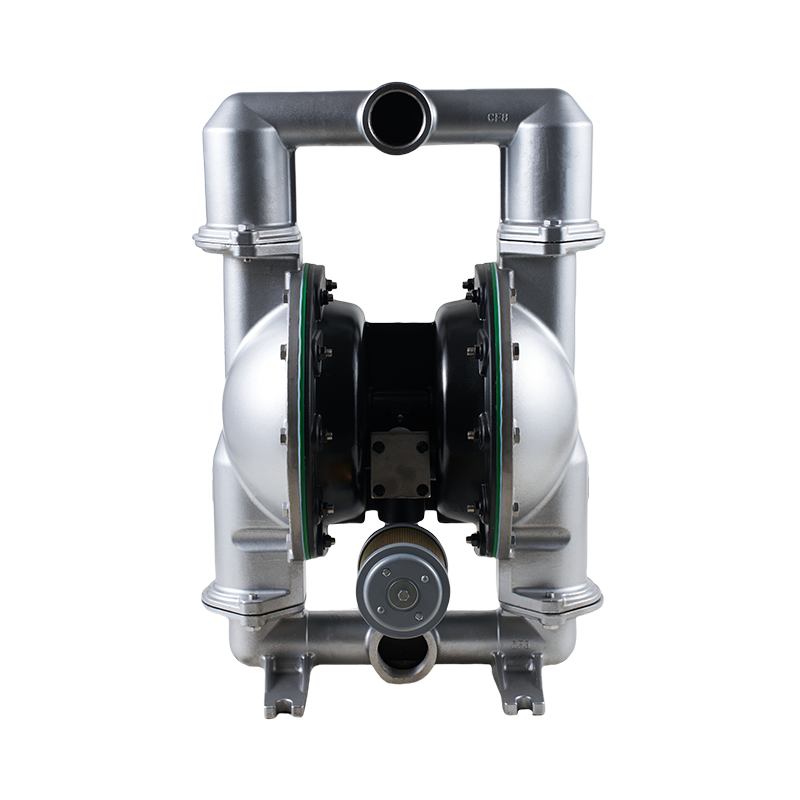
Cast Iron Diaphragm Pump are often chosen for tough working conditions where fluids are not always clean or predictable. The body feels solid, the structure looks simple, and the working principle seems straightforward. Yet, in real operation, small issues still appear. They rarely show up all at once. Instead, they develop slowly, almost quietly, until performance starts to feel "not quite right."
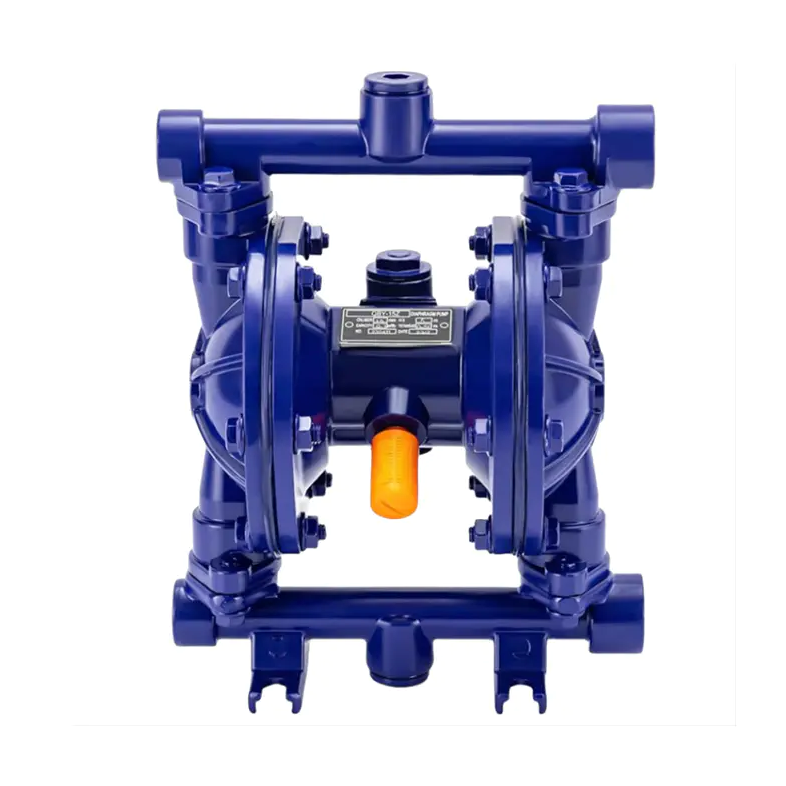
We are breaks down the common problems in a more practical way, with a focus on what actually happens on-site and how people usually respond when things go off track.
Why does a cast iron diaphragm pump start losing suction strength?
Loss of suction is usually noticed when the pump is running but the fluid movement feels weak. Sometimes the pump sounds normal, but the output does not match expectations.
One frequent reason is air entering the system. Even a small gap in a joint or connection can disturb internal pressure balance. Once air mixes into the flow path, the pump has to work harder just to maintain movement.
Another situation is gradual blockage. This does not always mean a full clog. More often, it starts with thin layers of residue building up inside the inlet path. Flow reduction is minor. Later, it becomes more obvious.
There is also a less visible factor: internal wear of sealing surfaces. When sealing is no longer tight, pressure inside the chamber becomes unstable, and suction weakens step by step.
A simple field approach often includes:
- Checking all inlet connections for looseness or air entry points
- Flushing the inlet line to remove early-stage buildup
- Listening for uneven sound during suction cycles
- Observing whether fluid intake feels "delayed" or inconsistent
Most suction problems are not sudden failures. They are gradual changes that become noticeable only after comparison with earlier performance.
What causes unstable or uneven flow output?
A pump that once delivered smooth output may start to feel irregular. The flow may rise and fall slightly, or pause for short moments.
This is often related to internal movement not staying consistent. When parts inside the system do not operate in a perfectly synchronized rhythm, the output reflects that imbalance.
A common trigger is partial restriction inside flow channels. Unlike a full blockage, this type of issue allows flow to continue but disrupts stability. The pump does not stop, yet the rhythm becomes uneven.
Wear in internal components can also contribute. When sealing or guiding parts lose precision, each cycle behaves slightly differently.
In real operation, this problem is often noticed through feel rather than measurement. Operators may describe it as "not steady anymore" even though the pump is still running.
Why does vibration and noise become more noticeable over time?
Cast iron pumps tend to transmit sound more directly because of their rigid structure. That means any internal change becomes easier to hear.
A common cause is loose installation. If the base is not fully stable, even small movement during operation can create repeated vibration. Over time, this vibration becomes louder.
Internal friction is another factor. When moving parts begin to lose smooth contact, sound changes from a steady hum to a rougher tone.
Air involvement inside the system can also create irregular knocking sounds. It does not always happen continuously. Sometimes it appears only during certain cycles, which makes it harder to identify at first.
Noise changes are often early signals, not final failures. They usually appear before performance drops significantly.
Why does pumping capacity slowly decrease?
A gradual drop in output is one of the overlooked issues. Because it happens slowly, it is often mistaken for normal variation.
The common reason is internal wear. Even if the pump continues to function, slight changes in sealing and movement efficiency reduce overall output over time.
Fluid characteristics also play a role. If the pumped material contains small particles, internal surfaces experience continuous mild abrasion. This does not stop the pump immediately, but it changes long-term behavior.
Valve response can also become less precise. When opening and closing is not fully consistent, part of the pumping cycle is lost.
The result is not a sudden breakdown, but a slow reduction in efficiency that becomes noticeable only after comparing older and newer performance.
Why do leakage issues appear around connection points?
Leakage usually shows up as visible signs, which makes it easier to detect than internal problems. Still, the cause is not always obvious at glance.
One common reason is sealing fatigue. Over time, sealing materials lose elasticity, especially under repeated pressure cycles.
Assembly alignment also matters. If two connected parts are slightly off-position, pressure can concentrate on one side, slowly creating a weak point.
In some cases, pressure inside the system fluctuates more than expected. When pressure is uneven, weak points are exposed more frequently.
A simple way to think about leakage is that it often reflects stress concentration rather than a single broken part.
Why does the diaphragm wear out at different speeds?
The diaphragm is designed to move continuously, so wear is expected. But the speed of wear is not always predictable.
One factor is operating frequency. Continuous high-cycle movement naturally leads to gradual material fatigue.
Another factor is fluid type. When the pumped medium contains abrasive particles, the diaphragm surface is exposed to repeated micro-impact.
Pressure behavior also matters. If the diaphragm is constantly stretched close to its limit, stress accumulates faster than in stable conditions.
A closer look at wear patterns in practice
Instead of failing suddenly, diaphragm wear usually follows a pattern:
- Early stage: No visible change, only slight efficiency variation
- Middle stage: Small pressure inconsistency begins to appear
- Later stage: Output becomes less stable, replacement becomes necessary
This progression makes regular inspection more important than waiting for full failure.
Why does the pump struggle to start or respond slowly?
Starting issues can be confusing because the pump may look fine externally but respond slowly when activated.
Air trapped inside the system is a common reason. The pump relies on a stable internal environment, and trapped air disrupts the initial movement cycle.
Another possible cause is initial resistance in the inlet path. If fluid cannot enter freely at the beginning, the pump takes longer to stabilize.
In some cases, mechanical response delay appears due to uneven internal pressure balance at startup.
Once the system clears itself and reaches stable flow, operation may return to normal. The issue is mainly in the starting phase rather than continuous running.
Quick overview of problems and practical responses
| Situation | What is usually happening | What can be checked first |
|---|---|---|
| Weak suction | Air entry or early blockage | Inlet connections, flow path |
| Uneven output | Internal restriction or wear | Flow channels, valve condition |
| Rising noise | Vibration or friction change | Mounting stability, internal movement |
| Capacity drop | Gradual wear | Sealing and valve efficiency |
| Leakage | Seal fatigue or misalignment | Connection points |
| Slow start | Air trapped or resistance | System priming and inlet check |
Cast iron diaphragm pumps tend to show their condition through gradual changes rather than sudden failure. Most issues begin quietly, often as small shifts in sound, flow, or response time. Once these signals are noticed early, adjustments are usually simple and practical rather than complex repairs.
Copyright © Zhejiang Zhanbo Diaphragm Pump Manufacturing Co., Ltd.

OEM/ODM Diaphragm Pump Manufacturer