

 русский
 Español
 عربى
عربى


How to Choose a China Diaphragm Pump Supplier
 2026.06.12
 Industry News
Choosing a China diaphragm pump supplier often feels simple at glance. Many companies appear similar. Websites show comparable products. Product photos look familiar across different suppliers. Yet the real differences only become clear when you look deeper into how a supplier operates, communicates, and supports long-term cooperation.
A diaphragm pump is used in many fluid-handling situations. It may work in transferring liquids, handling viscous materials, or dealing with challenging media. Because of this wide application, buyers usually care more about consistency, reliability, and service than surface-level product descriptions. The supplier behind the product becomes as important as the pump itself.
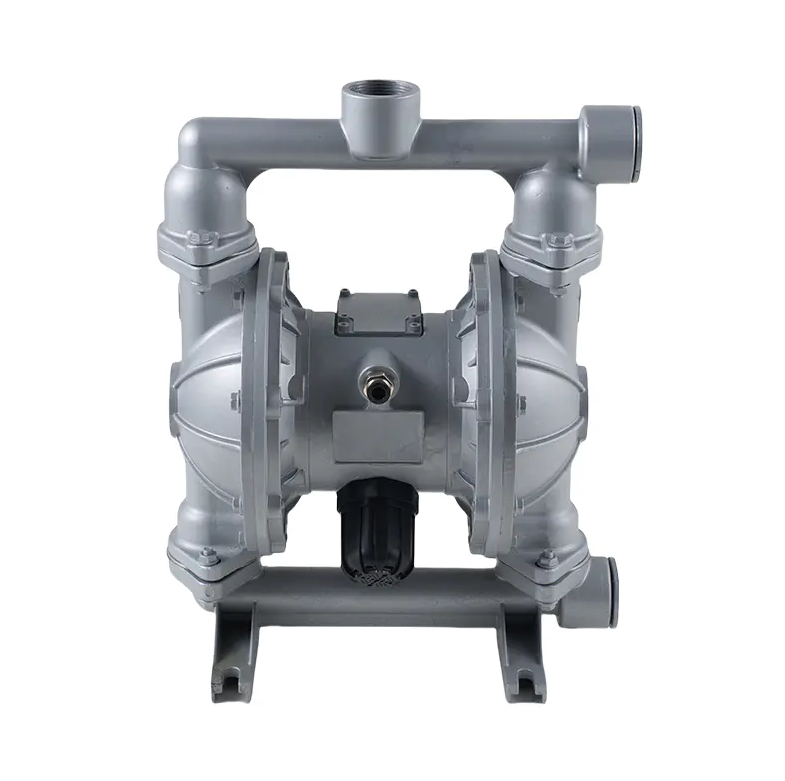
We are explores practical ways to evaluate and select a suitable supplier in China. The focus is not on technical specifications, but on real-world decision factors that influence long-term sourcing results.
What does a reliable supplier relationship actually look like?
A supplier is not just a seller of goods. In many cases, it becomes part of the buyer's supply chain structure. Communication speed, problem handling, and production stability all affect downstream operations.
A stable supplier relationship usually shows a few patterns. Responses are consistent. Information is clear. Product details do not change frequently without explanation. When adjustments are needed, the supplier explains reasons instead of simply changing terms.
Some buyers underestimate the importance of this relationship. They focus only on price comparisons. Later, they discover that delays or misunderstandings create higher costs than expected.
A useful way to think about supplier selection is this: the pump is the product, but reliability is the real value being purchased.
Why do China Diaphragm Pump Supplier Vary so Much?
China has a broad industrial manufacturing base. Diaphragm pump suppliers can be found in different regions, with different levels of production scale and specialization.
Some suppliers operate as large production facilities with stable output systems. Others may be smaller workshops focusing on flexible orders. Both types can serve different needs. The key is matching supplier structure with purchasing goals.
Variation also comes from business focus. Some suppliers concentrate on export markets. Others mainly serve domestic demand. Export-oriented suppliers are often more familiar with international communication habits, packaging expectations, and documentation flow.
This diversity is not a problem by itself. It becomes a challenge only when buyers assume all suppliers operate in the same way.
How important is factory capability in supplier selection?
Factory capability is often discussed, but not always clearly understood. It does not only refer to size or appearance of the facility.
A more practical view includes:
- Stability of production flow
- Consistency in material handling
- Internal quality checking steps
- Ability to manage repeated orders
- Flexibility for customization requests
A supplier with strong factory capability usually handles changes more smoothly. Orders do not depend on a single production line or a single group of workers. This reduces risk when demand increases or schedules shift.
Some buyers request factory visits or video checks. This is not only for verification. It also helps understand how the supplier thinks about production organization. Even simple observations, such as storage layout or workflow clarity, can reveal operational maturity.
What should you check beyond product appearance?
Product samples can be misleading if viewed in isolation. A good sample does not always represent long-term consistency.
Instead of focusing only on appearance, consider asking for repeat sample comparison. This helps evaluate stability across production batches. Small differences may indicate process control variation.
Another useful approach is to examine packaging habits and handling methods. Products that are carefully packaged often reflect attention to downstream shipping risks.
Communication during sampling also matters. Delayed responses or unclear explanations during this stage can indicate future challenges when orders become larger.
How do communication habits reflect supplier reliability?
Communication is often underestimated during supplier selection. Yet it reveals how the supplier operates internally.
Some indicators are subtle:
- Whether questions are answered directly
- Whether information is updated without confusion
- Whether commitments are clearly stated
- Whether follow-up is consistent
A supplier that communicates clearly tends to reduce misunderstanding in later stages. This becomes especially important in cross-border cooperation, where time zones and language differences already exist.
Short and clear communication is often more valuable than long explanations. It reduces interpretation gaps.
Should price be the main decision factor?
Price plays a role, but it rarely tells the full story.
A lower price may come with trade-offs in production stability or material consistency. A higher price does not always guarantee better coordination or service quality.
A more balanced approach is to compare value structure instead of single numbers. Value includes production reliability, delivery consistency, communication clarity, and problem response ability.
Some buyers use multi-supplier comparison strategies. This helps reveal differences in behavior under similar inquiry conditions.
Price alone is only one signal. It should not control the entire decision process.
What risks are often overlooked when selecting a supplier?
Several risks are not obvious at the beginning of cooperation:
- Production delays during peak demand periods
- Inconsistent product matching across batches
- Limited flexibility in order adjustment
- Communication gaps during urgent situations
- Documentation delays for international shipping
These risks do not always appear in early discussions. They usually emerge after cooperation begins.
One useful approach is to test responsiveness under small but realistic scenarios. For example, asking for slight order changes or documentation adjustments can reveal operational flexibility.
How does export experience influence cooperation quality?
Export experience often shapes how a supplier handles international orders.
Suppliers with export background usually understand packaging expectations, labeling requirements, and shipment coordination more naturally. They may also be more familiar with standard international communication formats.
However, export experience alone is not enough. It must be combined with stable production control and consistent internal management.
Some suppliers may be active in exporting but still rely heavily on external coordination for production. This can create delays during peak seasons.
A balanced supplier is one that manages both production and export coordination in a stable manner.
What role does customization play in supplier selection?
Customization is common in diaphragm pump sourcing. Buyers may request adjustments in structure, usage environment adaptation, or installation compatibility.
A capable supplier does not only accept or reject customization requests. It evaluates feasibility, explains limitations, and suggests workable solutions.
The way customization is handled often reflects technical understanding and production flexibility.
Simple acceptance without discussion may to problems later. Clear explanation, even if it involves limitations, is often a better sign of maturity.
How to evaluate long-term cooperation potential?
Long-term cooperation depends on consistency rather than one-time performance.
Several signals can help evaluate this:
- Stability in repeated orders
- Predictable communication behavior
- Willingness to solve small issues
- Clear handling of after-sales situations
- Consistent documentation quality
A supplier that maintains stable cooperation habits is often easier to work with over time. It reduces uncertainty in planning and procurement cycles.
Short-term advantages may look attractive. Long-term stability is usually more valuable in industrial sourcing environments.
Copyright © Zhejiang Zhanbo Diaphragm Pump Manufacturing Co., Ltd.

OEM/ODM Diaphragm Pump Manufacturer