

 русский
 Español
 عربى
عربى

 Home / Blogs / Industry News / Stainless Steel Pneumatic Diaphragm Pump: The Backbone of Sanitary and Corrosive Fluid Handling
 Stainless Steel Pneumatic Diaphragm Pump: The Backbone of Sanitary and Corrosive Fluid Handling
 2026.07.17
 Industry News
Processing industries face difficult pumping challenges. Shear-sensitive emulsions. Abrasive slurries. Viscous pastes. Flammable solvents. Without the right pump design, it is a product quality risk. A stainless steel pneumatic diaphragm pump brings together two critical attributes: corrosion-resistant construction and explosion-proof operation. It handles delicate fluids without degradation. It runs on compressed air without electrical ignition sources. It makes cleaning validation easier and downtime shorter.
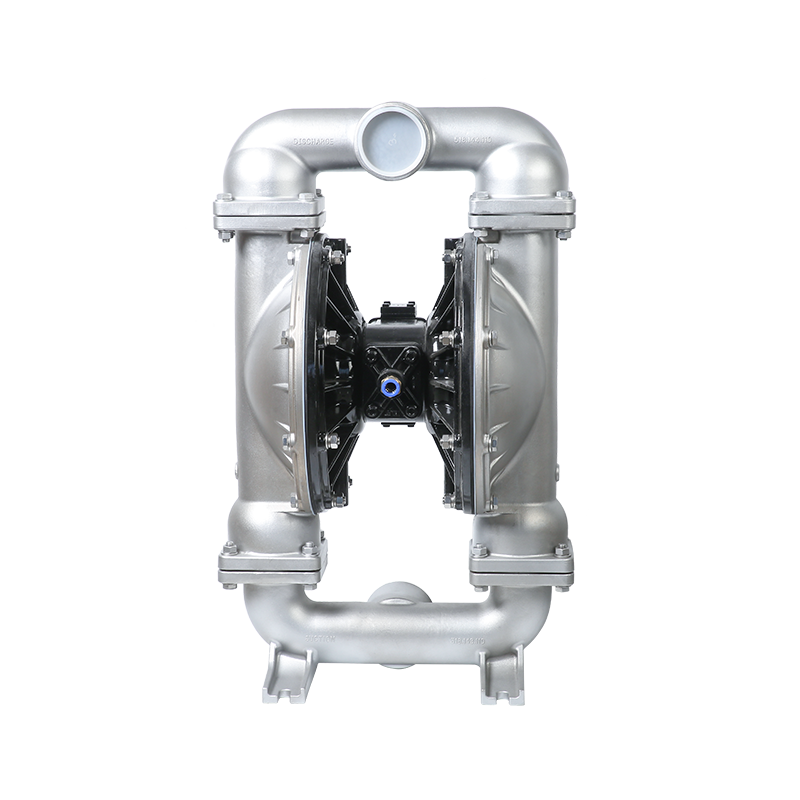
How a Stainless Steel Pneumatic Diaphragm Pump Operates
It uses alternating air pressure to flex two diaphragms
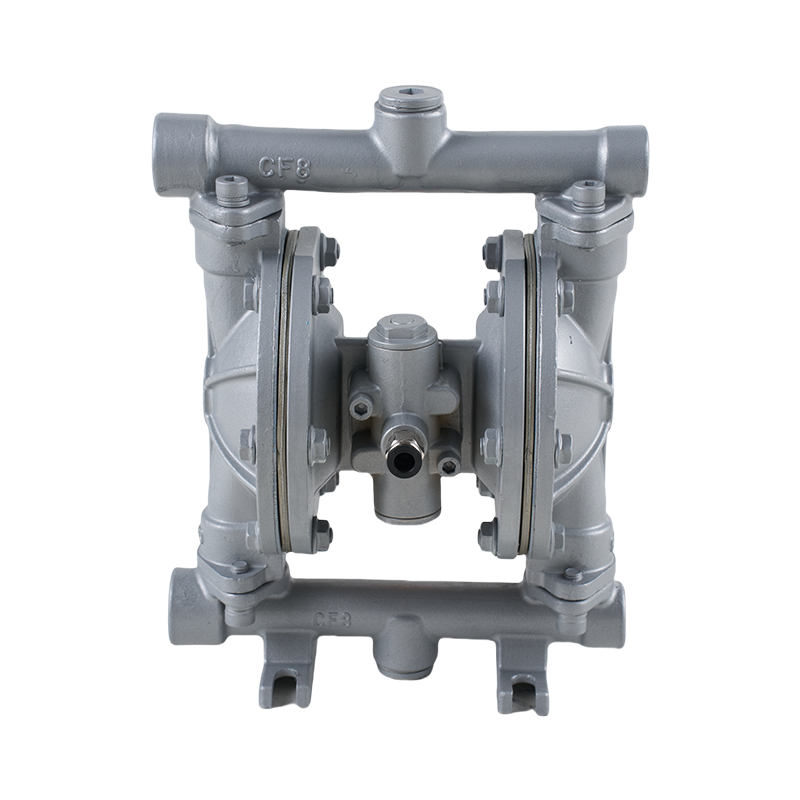
A stainless steel pneumatic diaphragm pump contains two flexible membranes connected by a common shaft. One side of each diaphragm contacts the fluid. The other side receives compressed air. An air distribution valve alternates the pressure between the two diaphragms. One chamber draws fluid in while the other expels it. The cycle repeats continuously. Everything is self-priming. Everything is dead-head capable.
The pump handles viscous materials without degrading them. The process engineer selects the pump for shear-sensitive products. The diaphragms move gently. The fluid experiences low internal velocities. Emulsions remain stable. Cells remain intact.
It eliminates rotary seals and mechanical shaft seals
Conventional pumps have dynamic seals that wear and leak. A stainless steel pneumatic diaphragm pump has no rotating shaft penetrating the fluid chamber. The diaphragms form a static barrier. The fluid is fully contained. Leakage is eliminated. Product loss is avoided.
What Makes the Stainless Steel Construction Critical
Corrosion resistance for aggressive media
The fluid-contacting surfaces are fabricated from austenitic stainless steel. A stainless steel pneumatic diaphragm pump uses grades such as 304, 316, or 316L. The material resists pitting from chlorides. It withstands acidic and alkaline environments. The surface remains passive. Contamination from metallic corrosion is prevented.
Sanitary finish for hygienic applications
The internal surfaces are polished to a smooth finish. A stainless steel pneumatic diaphragm pump achieves surface roughness (Ra) below 0.8 micrometres. The smooth surface prevents bacterial adhesion. Cleaning-in-place (CIP) is effective. Sterilisation-in-place (SIP) is practical. The pump meets FDA and EHEDG guidelines.
Weld integrity for pressure retention
The pump body is assembled with full-penetration welds. A stainless steel pneumatic diaphragm pump undergoes radiographic or dye-penetrant inspection. The welds are free from porosity. The pump withstands repeated pressure cycling.
Here is what a typical pump configuration offers:
- Flow range: 5 to 150 litres per minute
- Discharge pressure: up to 8.6 bar
- Fluid temperature: up to 120°C for continuous service
- Surface finish: Ra 0.8µm or better
- Air consumption: 0.5 to 2.5 m³/min depending on size
Where a Stainless Steel Pneumatic Diaphragm Pump Excels
Food and beverage processing
Syrups, fruit purees, and sauces require gentle transfer. A stainless steel pneumatic diaphragm pump moves these products without aerating or separating them. The pump is easily dismantled for cleaning.
Pharmaceutical and biotechnology
Protein solutions and cell cultures are shear-sensitive. A stainless steel pneumatic diaphragm pump provides low-shear handling. The pump is validated for cleanliness. Sterile connections are available.
Chemical and petrochemical
Aggressive solvents and monomers require sealed pumping. A stainless steel pneumatic diaphragm pump contains hazardous fluids. The pump is explosion-proof by design. No electrical power is present at the pumping chamber.
Paint and coatings
Pigmented dispersions are abrasive and viscous. A stainless steel pneumatic diaphragm pump handles the solids without settling. The pump is slow-speed. It does not over-shear the dispersed particles.
Wastewater and industrial effluent
Corrosive waste streams contain mixed chemicals. A stainless steel pneumatic diaphragm pump transfers the effluent. The pump tolerates varying fluid properties.
What to Look for in a Stainless Steel Pneumatic Diaphragm Pump
The surface finish specification
The fluid-contact surfaces must be verified. A stainless steel pneumatic diaphragm pump should provide a documented surface roughness measurement. The Ra value must be achievable after welding and fabrication.
The diaphragm material compatibility
The diaphragms contact the fluid directly. A stainless steel pneumatic diaphragm pump offers diaphragm options such as PTFE, EPDM, and FKM. The selected material must resist chemical attack and maintain flexibility at operating temperature.
The ball check valve design
The inlet and outlet valves use spherical balls. A stainless steel pneumatic diaphragm pump has ball materials matched to the fluid. Hard balls for abrasive slurries. Soft balls for viscous pastes. The ball guides prevent jamming.
The cleanability and drainability
The pump must drain completely without trapped volumes. A stainless steel pneumatic diaphragm pump has sloped internal passages. No blind pockets. No dead legs. The pump drains in the vertical orientation.
The air distribution system
The air valve must be reliable and dry. A stainless steel pneumatic diaphragm pump includes an air filter and lubricator. The valve does not require external lubrication. It operates in dusty environments.
Here is what makes a reliable pump:
- Stainless steel grade appropriate for the fluid
- Surface finish documented and verified
- Diaphragm material compatible with process chemistry
- Fully drainable internal geometry
- Air valve with low icing tendency
- Serviceable without special tools
A stainless steel pneumatic diaphragm pump is a specific combination of material and drive technology. But it determines whether a sensitive product reaches the filling line intact or degraded. It decides whether the production floor remains safe or faces ignition risks. Choose a pump with appropriate stainless steel grade, verified surface finish, compatible elastomers, and drainable geometry. Your products will meet specifications. Your operations will be safer. That is the purpose of a stainless steel pneumatic diaphragm pump. To make difficult fluids transfer reliably and gently.
Copyright © Zhejiang Zhanbo Diaphragm Pump Manufacturing Co., Ltd.

OEM/ODM Diaphragm Pump Manufacturer