

 русский
 Español
 عربى
عربى

 Home / Blogs / Industry News / What Role Do Air Operated Double Diaphragm Pump Manufacturers Play in the Supply Chain
 What Role Do Air Operated Double Diaphragm Pump Manufacturers Play in the Supply Chain
 2026.07.03
 Industry News
Walk into any industrial site and you will see machines moving materials from one place to another. Liquids, mixtures, sometimes even semi-solid substances. These movements look simple on the surface, but they rely on a chain of equipment working together.
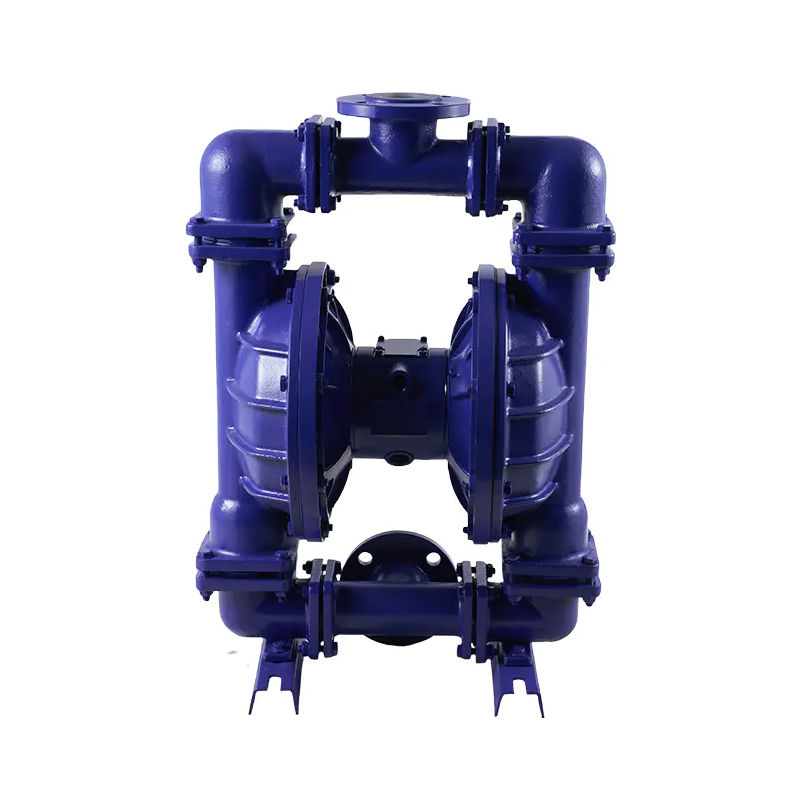
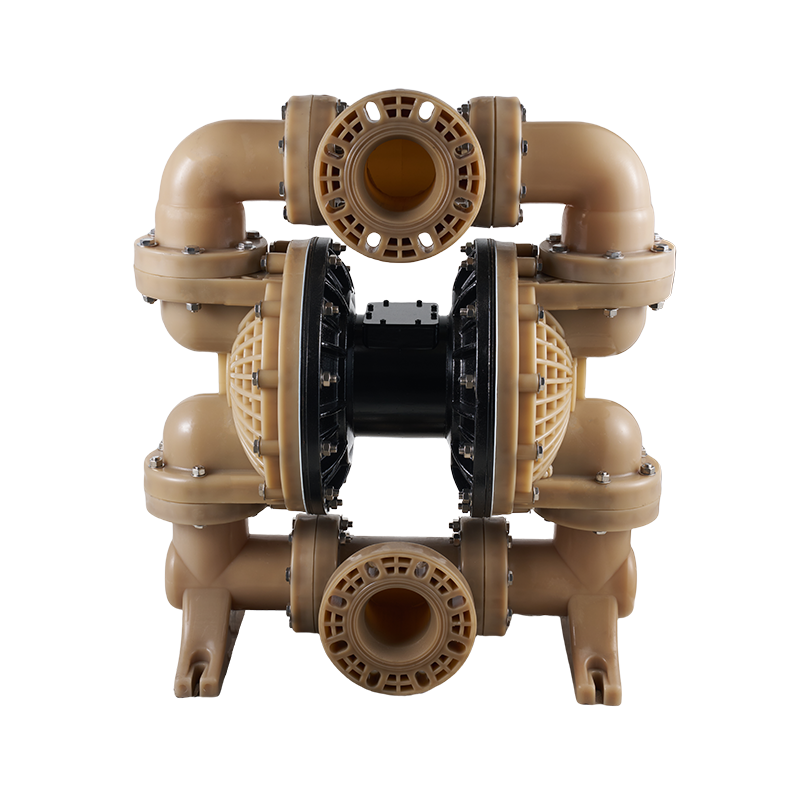
Air operated double diaphragm pumps are part of that chain. They do not stand out. They are not always visible. Yet they sit quietly inside systems that depend on steady flow.
Behind these pumps are manufacturers who shape how the equipment enters the supply network. Their role does not stop at production. It continues into distribution, coordination, and long-term supply support.
Why do air operated double diaphragm pump manufacturers sit in a central position within the supply chain?
A supply chain is often described as a line. Raw material at one end, final use at the other. In reality, it feels more like a web. Many points connect, and some points carry more weight than others.
Pump manufacturers are one of those heavier points.
They take in materials and turn them into usable equipment. That equipment is then passed forward to factories, processing plants, or system builders. If this step slows down, the next step cannot move at the same pace.
What makes their role noticeable is not just production. It is the timing. If equipment arrives too early, it may sit unused. If it arrives too late, work may pause.
So their position is not just central. It is sensitive.
How do manufacturers connect material supply with real industrial use?
The connection is not as direct as it sounds. It moves through several layers.
Materials arrive from different sources. They are shaped, assembled, checked, then prepared for movement again. After that, the pumps enter another phase where they are stored, shipped, or integrated into larger systems.
Each step needs to match the next.
If materials come in at an uneven pace, production becomes harder to manage. If finished pumps leave the factory without coordination, they may not reach users at the right moment.
Manufacturers work between these points. They adjust flow in both directions. Upstream and downstream are always in motion, and the manufacturer stands in between, keeping things from drifting too far apart.
What does supply chain stability really depend on?
People often think stability means everything stays the same. In industrial supply, that is rarely the case.
Stability here feels more like balance. Movement continues, but it does not swing too far in any direction.
Pump manufacturers help create this balance. They keep production running at a pace that matches demand without overloading storage or leaving gaps in supply.
This balance shows up in simple ways:
- Equipment arrives when it is expected
- Production lines do not need sudden changes
- Storage spaces are not pushed beyond comfort
- Orders move forward without repeated delays
When these conditions hold, the system feels steady even though it is always moving.
How does production planning influence the wider supply network?
Production planning sounds like an internal task, but its effects reach far beyond the factory floor.
If a manufacturer produces too much at once, the extra units must be stored somewhere. That creates pressure on storage and transport. If production is too slow, downstream users may begin to wait.
So planning becomes a kind of quiet negotiation between different parts of the chain.
Manufacturers look at incoming signals. Orders, usage patterns, general demand movement. They adjust output based on what they see.
This does not always lead to perfect alignment. But when done carefully, it reduces sharp changes and keeps the system closer to a steady rhythm.
What challenges do pump manufacturers face as part of the supply chain?
No supply chain stays still. Changes come from different directions, often at the same time.
Demand can rise without much warning. It can also slow down just as quickly. Manufacturers need to respond without causing disruption.
Coordination is another challenge. Materials come from one side. Distribution moves toward another. Keeping both sides aligned requires constant attention.
There are also practical concerns. Storage space, transport timing, handling conditions. Each of these can affect how smoothly products move.
What makes this role demanding is that these challenges rarely appear one at a time. They overlap.
Manufacturers learn to adjust in small steps rather than large shifts. That approach helps avoid sudden breaks in the flow.
How do manufacturers support industries that rely on these pumps?
Downstream industries often focus on their own processes. They expect equipment to be available when needed, without thinking too much about how it got there.
This expectation places pressure on manufacturers.
Support comes in a few quiet forms:
- Keeping equipment available over time
- Matching delivery with usage cycles
- Avoiding long gaps between orders and supply
- Responding when demand begins to shift
When this support works well, it is almost invisible. Production continues. Systems run. Attention stays on the main task instead of supply concerns.
What role does distribution play after production is complete?
Once pumps leave the production line, they begin another journey. This part is just as important as manufacturing itself.
Distribution is not only about moving goods. It is about when and how they move.
Manufacturers often stay involved in this stage. They coordinate with transport partners, plan shipment timing, and decide how products are stored before dispatch.
A delay here can undo careful planning done earlier.
Smooth distribution helps keep everything connected. It ensures that the effort put into production continues forward instead of stopping halfway.
How important is timing across the entire process?
Timing runs through every part of the supply chain.
Materials must arrive before production begins. Finished pumps must leave before storage becomes crowded. Equipment must reach users before it is needed in operation.
If any part falls out of sync, the effect spreads.
Manufacturers work with timing in mind all the time. Not just when something goes wrong, but as part of daily planning.
Good timing does not draw attention. It simply allows the system to keep moving without friction.
How do manufacturers adjust when demand changes?
Demand rarely follows a straight line. It rises, levels off, then shifts again.
Manufacturers respond by adjusting production rather than stopping or starting suddenly.
They may slow output for a short period, then increase it again when signals change. They may also adjust how products are distributed, sending more to one area while reducing flow to another.
These adjustments are often small. That is what keeps the system stable.
Large changes can create new problems, even when they solve the original one.
A simple way to understand their position in the chain
| Stage | What manufacturers handle | What it affects |
|---|---|---|
| Material intake | Receiving and organizing inputs | Production readiness |
| Production | Assembling pumps | Equipment availability |
| Distribution | Managing movement and storage | Delivery flow |
| Industry support | Aligning supply with demand | Operational continuity |
Each stage overlaps with the next. None of them stands alone.
Why does flexibility matter alongside stability?
Stability keeps the system steady. Flexibility allows it to respond.
Manufacturers need both.
If they focus only on stability, they may struggle when demand shifts. If they focus only on flexibility, the system may lose its rhythm.
So they balance the two. Small adjustments, careful timing, steady output with room for change.
This balance is not fixed. It shifts depending on conditions.
How does their role shape the overall movement of industrial systems?
Industrial systems depend on flow. Materials move, processes connect, and equipment supports these movements.
Air operated double diaphragm pumps are part of this motion. And the manufacturers behind them influence how smoothly that motion continues.
Their work is not always visible. It does not appear in the final stage where products are used. But it sits underneath, shaping how everything connects.
When supply moves well, attention shifts elsewhere. When it does not, the gap becomes noticeable very quickly.
That difference is where the role of manufacturers becomes clear.
Copyright © Zhejiang Zhanbo Diaphragm Pump Manufacturing Co., Ltd.

OEM/ODM Diaphragm Pump Manufacturer