

 русский
 Español
 عربى
عربى


Why Does a Diaphragm Pump Factory Focus on Flow Stability
 2026.10.06
 Industry News
A pump may appear to be working normally while the amount of fluid moving through it changes from one operating cycle to another. Small differences in diaphragm movement, valve seating, air supply, assembly, or material selection can affect how steadily fluid enters and leaves the pump. For equipment used in repeated transfer work, these changes can become noticeable during operation.
For a Diaphragm Pump Factory, flow stability is therefore connected with several parts of production rather than one individual component. The diaphragm has to move in a consistent way, valves need to respond properly, and the assembled parts need to work together without unnecessary variation. Testing also provides a way to check whether the finished pump behaves as expected before it leaves the production area.
The same consideration becomes relevant when a pump is made for a particular fluid or operating condition. A change in material, connection arrangement, or working environment can alter the way the pump performs. Looking at flow stability from the manufacturing side helps connect individual production steps with the actual conditions in which the pump will be used.
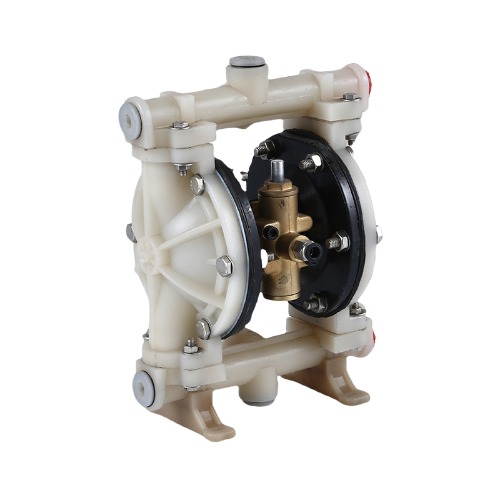
How Diaphragm Thickness Changes Pumping Consistency
The diaphragm is repeatedly moved during pumping, so its physical condition has a direct connection with the movement of fluid. If the diaphragm does not have a consistent shape or thickness, its movement may vary during operation. The result can be a change in the rhythm of the pumping process.
During production, attention to the diaphragm is not limited to whether it can be installed into the pump. Its size, surface condition, flexibility, and consistency from one piece to another also matter. A diaphragm that fits correctly but behaves differently from another diaphragm can create variation between finished pumps.
A Diaphragm Pump Factory may therefore check the diaphragm before it becomes part of the finished assembly. Common points include:
- Whether the diaphragm matches the required size
- Whether its surface is free from visible damage
- Whether its shape remains consistent
- Whether the material suits the intended fluid and operating conditions
- Whether different production batches show noticeable differences
The way the diaphragm moves also matters after assembly. Excessive resistance can change its movement, while an unsuitable material may respond differently when exposed to the fluid being transferred. For this reason, diaphragm selection and production consistency are closely connected with the behavior of the finished pump.
Why Valve Seating Affects Diaphragm Pump Flow
Fluid has to enter and leave the pumping chamber in the intended direction. Valves help control this movement. When a valve does not sit correctly, the amount of fluid passing through the pump can change even when the diaphragm itself is moving normally.
The contact between the valve and its seating surface needs to remain consistent. A small installation difference may affect how quickly the valve opens or closes. If fluid can move back when it should be moving forward, the output may become less consistent.
This is why valve inspection deserves separate attention during production. The relevant checks can include the condition of the valve, its position, the seating area, and the surrounding sealing parts.
| Component area | Possible variation | Effect on operation |
|---|---|---|
| Diaphragm | Shape or thickness difference | Changes in diaphragm movement |
| Valve | Position or seating difference | Changes in fluid movement |
| Sealing area | Uneven contact | Possible leakage or pressure loss |
| Connection area | Loose or uneven fitting | Changes in operating condition |
For a Diaphragm Pump Factory, checking the valve after installation can help identify problems that would not be visible from an external inspection alone. It also helps separate valve-related issues from problems associated with the diaphragm or drive conditions.
What Happens When Diaphragm Movement Becomes Uneven
A diaphragm does not simply move back and forth without affecting the rest of the pumping process. Its movement changes the available space inside the pumping chamber, which in turn affects fluid entering and leaving the pump.
When that movement becomes uneven, several operating signs may appear. The output may fluctuate, the pumping rhythm may feel irregular, or the fluid may not move through the pump at the expected pace. These symptoms do not necessarily point to one specific cause.
For example, uneven movement may be related to the diaphragm itself, the way it was installed, the condition of connected parts, or the air supplied to the pump. That makes it useful to consider the entire operating process rather than replacing one component immediately.
A useful way to look at the issue is to follow the movement through the pump:
Drive condition → diaphragm movement → chamber change → valve response → fluid movement
A change at any point can influence what happens at the next stage. This connection is also why flow stability is treated as a production concern rather than simply an operating concern.
How Air Supply Changes Diaphragm Pump Flow
For an air-operated diaphragm pump, the air supply provides the force needed to move the diaphragm. If the supply changes during operation, the movement of the diaphragm can also change.
A steady air supply allows the pumping motion to remain more consistent. If the supply is interrupted, restricted, or adjusted differently, the pump may respond with a different operating rhythm. The resulting change can be seen in fluid movement even though the fluid itself has not changed.
When checking an air-operated pump, it is useful to consider the relationship between the air source and the pump rather than looking at the pump alone. The connection, air path, operating adjustment, and supply condition can all affect how the diaphragm moves.
For production testing, this means the pump should be observed under conditions that represent its intended use. Otherwise, a pump may appear to behave differently when it is connected to a different air source during actual operation.
A Diaphragm Pump Factory can also use this stage to identify whether an unstable output is related to the pump assembly or to the conditions under which it is being operated. Separating these factors makes later inspection more practical.
How Assembly Errors Lead to Unstable Pump Output
Individual parts can meet their requirements and still produce an inconsistent result if they are assembled incorrectly. The diaphragm, valves, sealing parts, and connections have to work together in the intended positions.
Assembly problems can take several forms. A diaphragm may not sit evenly, a valve may be positioned incorrectly, or a connection may not be tightened in a consistent manner. None of these issues necessarily changes the appearance of the complete pump, which is why visual inspection alone has limits.
Production personnel can pay attention to areas such as:
- Correct positioning of the diaphragm
- Proper placement of valves and related parts
- Even contact around sealing areas
- Secure connections between pump sections
- Clean contact surfaces before assembly
The purpose is not simply to make the finished unit look complete. Correct assembly allows the moving parts to operate in the relationship for which they were designed.
This becomes particularly relevant when multiple pumps are assembled in succession. If the assembly method changes from one unit to another, differences may appear in operation even when the same parts are used.
Why Pump Testing Matters Before Factory Shipment
Testing provides a practical opportunity to compare the finished pump with its intended operating requirements. It comes after the individual parts have been assembled, so it can reveal problems that are difficult to identify by looking at separate components.
Depending on the pump and its intended application, production checks may involve operating behavior, fluid movement, pressure response, sealing condition, and unusual noise or movement. The exact checks can vary according to the pump configuration and its intended use.
A basic testing sequence can involve:
- Inspecting the assembled pump before operation.
- Connecting it under the intended operating conditions.
- Observing its movement and fluid output.
- Checking for visible leakage or abnormal behavior.
- Recording problems that require adjustment or reinspection.
The value of testing is not limited to identifying defective units. It can also reveal repeated patterns. If several pumps show a similar change in output, the production team has a reason to examine a shared component, assembly step, or operating condition.
For a Diaphragm Pump Factory, this feedback can connect production inspection with actual pump behavior. It gives the manufacturing process a way to identify differences before the equipment is packed and shipped.
How Custom Pump Materials Affect Flow Stability
A pump intended for one fluid may not require exactly the same material choices as a pump intended for another. The fluid being transferred, its temperature, and the surrounding working conditions can all affect which diaphragm, sealing parts, and pump body materials are suitable.
Material selection can also affect the way the pump behaves over repeated operation. If a material changes noticeably under the intended conditions, the diaphragm or sealing areas may no longer behave in the same way as they did during initial testing.
This is particularly relevant to custom orders. Instead of treating customization as a change to the outside appearance of a pump, production needs to consider how the requested conditions affect the parts that come into contact with the fluid and the parts involved in movement.
| Custom requirement | Production point to review | Possible operating concern |
|---|---|---|
| Different fluid | Contacting materials | Material response during operation |
| Different temperature | Diaphragm and sealing parts | Changes in material behavior |
| Different connection | Port and connection arrangement | Fit and sealing condition |
| Different operating pattern | Moving parts and assembly | Repeated movement consistency |
A Diaphragm Pump Factory handling custom production therefore needs clear information before manufacturing begins. The fluid, operating conditions, connection requirements, and expected working pattern can help determine which parts need closer attention.
How Does a Diaphragm Pump Factory Keep Batch Quality Consistent
Once production moves from an individual pump to a batch, consistency becomes a different kind of challenge. Each unit may use the same general design, but differences in incoming parts, assembly conditions, or inspection can still create variation.
Keeping production consistent begins with controlling the conditions that can change from one unit to another. Parts need to correspond with the intended specifications, assembly steps need to be followed in the same manner, and finished pumps need to receive appropriate checks.
The process can be viewed through several connected stages:
Part preparation → Assembly → Inspection → Operation test → Adjustment when needed → Final check
If an issue appears during testing, the useful question is not only whether the individual pump should be adjusted. It can also be whether the same issue could occur in other units from the same production process.
This approach is particularly relevant when custom pumps are produced in batches. Changes introduced for one application need to remain consistent across the units made for that order.
For buyers working with a Diaphragm Pump Factory, batch consistency can also be discussed before production starts. Clear drawings, material requirements, connection details, operating conditions, and inspection expectations reduce the chance of different interpretations during manufacturing.
Flow stability is therefore connected with more than the final test. It begins with the condition of the diaphragm and other parts, continues through assembly, and is affected by the conditions under which the pump operates. When these stages are considered together, changes in pump output become easier to trace to their possible source.
The manufacturing side and the application side also need to correspond. A pump can only be assessed properly when its intended fluid, operating environment, and working conditions are clear. For that reason, communication about specifications and operating requirements remains part of the production process, particularly when a Diaphragm Pump Factory is producing equipment for a specific application.
Copyright © Zhejiang Zhanbo Diaphragm Pump Manufacturing Co., Ltd.

OEM/ODM Diaphragm Pump Manufacturer